 blog
blog
Best Budget Hiking Gear List for 2026
Table of Contents
- Why Budget Hiking Gear Doesn't Mean Cutting Corners on Safety
- Best Budget Hiking Backpack: Capacity, Fit, and Price
- The 10 Essentials Hiking Checklist: What You Actually Need
- Budget Backpacking Gear Under $500: Complete Day Hike Setup
- Where to Save Money and Where Not to Skimp
- Seasonal and Regional Adjustments for Your Hiking Gear
- Building Your Budget Hiking Gear List: Common Mistakes to Avoid
- Frequently Asked Questions
Last Updated: October 18, 2026
Why Budget Hiking Gear Doesn't Mean Cutting Corners on Safety
Building a budget hiking gear setup doesn't require sacrificing safety. Never compromise on navigation, first aid, or weather protection. Real savings come from optional comfort upgrades: fancy compression bags, premium insulation ratings beyond what you need, or ultralight materials.
At Camp Cave Forest Supply, we help hikers assemble reliable kits on tight budgets. Beginners often overspend on rarely used items and underspend on safety and comfort.
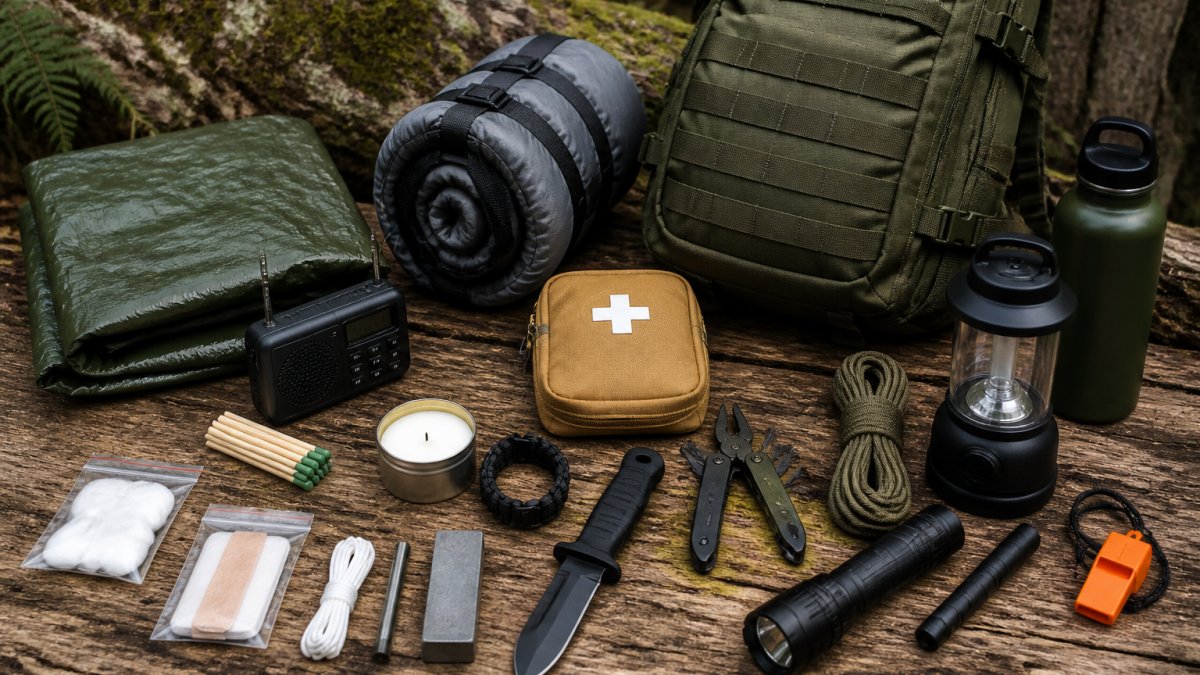
The 10 essentials hiking checklist exists for a reason: these items address navigation, shelter, weather, hydration, and emergency communication, and every one belongs in your pack regardless of budget. Save by choosing functional versions over premium brands.
Best Budget Hiking Backpack: Capacity, Fit, and Price
Your backpack is the foundation of every hike. A poorly fitting pack creates discomfort and limits how much weight you can carry safely.
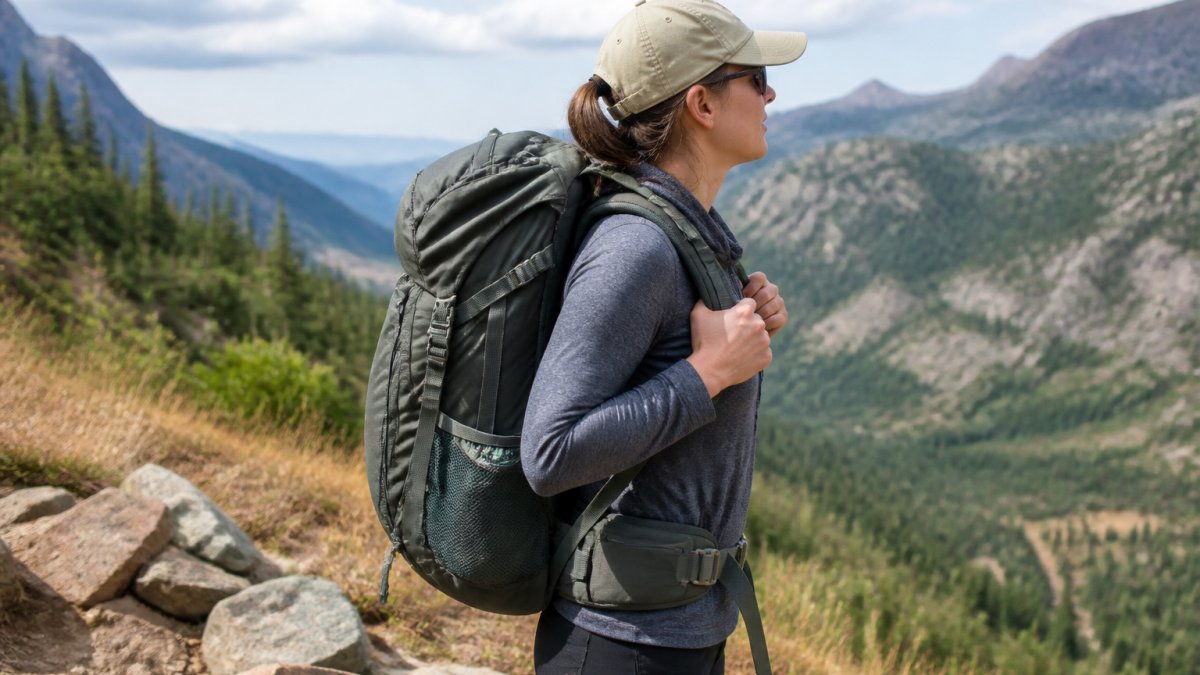
Day hikes need 20-30 liters, overnight trips 40-50, and multi-day backpacking 50-65. Oversizing is tempting on a budget but encourages overpacking and strains your back and shoulders.
Fit matters more than brand name. The hip belt should sit on your hip bones, not your waist, and shoulder straps should be snug but not restrictive.
Look for packs made from durable nylon or polyester rather than ultralight materials. You'll sacrifice a few ounces but save significantly on cost and gain better abrasion resistance on rough terrain.
The 10 Essentials Hiking Checklist: What You Actually Need
The 10 essentials address specific survival and safety needs. They're not negotiable based on budget, and each category has affordable options that perform as well as premium versions.
Navigation and Emergency Communication
A map and compass cost under $15 combined and require no batteries. GPS devices and satellite communicators are optional upgrades for longer backcountry trips, but for day hikes and established trails, a map and compass are sufficient and reliable.
A whistle costs $3-5 and carries farther than your voice in emergencies. Satellite SOS devices cost $300+ but aren't required for most hiking. A whistle plus telling someone your route covers emergency communication on a budget.
Shelter, Sleep System, and Weather Protection
A lightweight tarp or emergency bivy sack weighs ounces and costs $20-40, providing emergency protection from wind and rain if you get stranded. For day hikes, a tarp is sufficient. For overnight trips, budget-friendly tents range from $80-200.
Sleeping bags and pads are where many hikers overspend. A 20°F bag costs less than a 0°F bag and suits most recreational hiking. Inflatable pads cost $30-60; closed-cell foam pads cost $15-25, weigh slightly more, and last indefinitely without puncture risk.
Layers matter more than a single premium jacket. A $20 fleece and a $30 rain shell outperform a $150 all-in-one jacket, letting you adjust to changing conditions without paying for unused features.
Water, Food, and First Aid
A reusable water bottle costs $10-20, and a filter that removes bacteria and protozoa costs $20-40 and lasts hundreds of liters. Boiling works but requires fuel and time; filtering is faster and lighter for budget hiking gear lists.
Energy-dense options like trail mix, energy bars, and nuts cost less per calorie than fresh food and don't require refrigeration. Pack what you'll actually eat; grocery store options work as well as specialized hiking food.
A basic first aid kit costs $15-25 and covers cuts, blisters, sprains, and minor burns. Pre-assembled kits are often cheaper than building your own; include blister treatment, pain relievers, antibiotic ointment, and bandages at minimum.
Budget Backpacking Gear Under $500: Complete Day Hike Setup
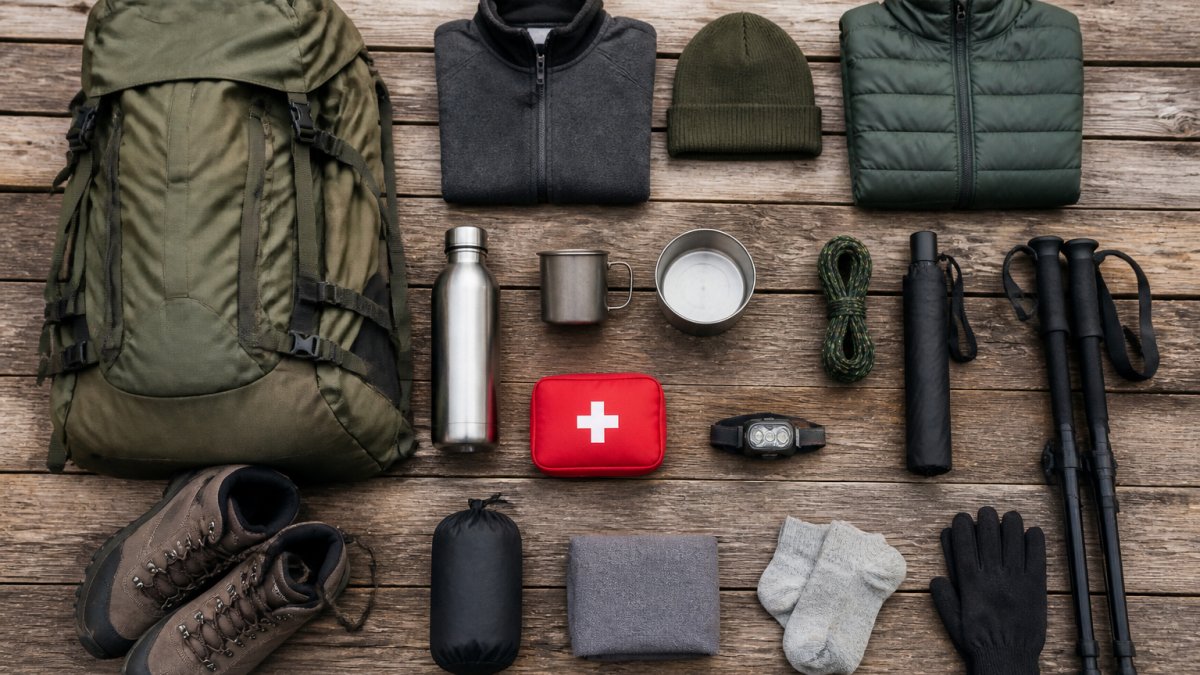
A complete day-hike kit costs roughly $250-350 if you own footwear and basic clothing, or $400-500 from zero. The table below itemizes a trip-ready setup with realistic price ranges and shows how to prioritize purchases so you're never on trail without safety-critical gear.
Itemized Day-Hike Checklist With Prices
| Priority | Category | Item | Typical Price Range | Notes |
|---|---|---|---|---|
| 1 | Navigation | Paper map + baseplate compass | $10-20 | No batteries; learn to use before you go |
| 1 | Emergency | Whistle | $3-5 | Louder than voice; carries farther |
| 1 | First aid | Basic kit (bandages, blister treatment, pain relievers, antibiotic ointment) | $15-25 | Pre-assembled kits are usually cheaper |
| 1 | Water | 1L reusable bottle | $10-20 | Carry at least two bottles in heat |
| 1 | Water | Squeeze-style filter (bacteria/protozoa) | $20-40 | Lasts hundreds of liters with backflushing |
| 1 | Light | Headlamp + spare batteries | $15-25 | Essential if daylight runs short |
| 1 | Weather | Rain shell | $30-60 | Ventilation matters more than brand |
| 2 | Pack | 20-30L day pack | $60-100 | Fit matters more than features |
| 2 | Insulation | Fleece or synthetic mid-layer | $20-40 | Cheaper and more versatile than a single jacket |
| 2 | Sun | Wide-brim hat + SPF sunscreen | $15-25 | Non-negotiable on exposed terrain |
| 3 | Comfort | Trekking poles (pair) | $25-50 | Saves knees on descents |
| 3 | Repair | Duct tape, cord, spare buckle | $10-15 | Small kit prevents trip-ending failures |
| 3 | Emergency shelter | Tarp or emergency bivy | $20-40 | Day-hike insurance, not a sleep system |
Day-hike total (owning footwear and clothing): roughly $250-350. Starting from zero, adding trail shoes ($60-120) and hiking socks ($15-25): roughly $325-495.
Overnight Add-Ons (Only If You Are Actually Backpacking)
Do not buy these for day hikes. Add them only when you have booked an overnight trip:
| Category | Item | Typical Price Range |
|---|---|---|
| Pack | 40-50L overnight pack | $80-140 |
| Shelter | Budget tent or tarp setup | $80-200 |
| Sleep | 20°F sleeping bag | $60-120 |
| Sleep | Inflatable or closed-cell pad | $15-60 |
| Cook | Stove + fuel + pot | $30-60 |
| Food | Per-trip food cost | $20-40 |
Overnight add-on total: roughly $285-620, on top of the day-hike kit.
How to Prioritize Purchases
Buy in priority order. Priority 1 items are safety-critical and should be purchased before any comfort item. Priority 2 items make the hike functional and comfortable. Priority 3 items are upgrades you can defer until you know you will keep hiking.
Where the Money Actually Goes
Most beginners overspend on the pack and underspend on water treatment and navigation. A $100 pack with a $20 filter and a $15 map-and-compass set beats a $200 pack with no filter and phone-only navigation. The table above reflects that trade-off deliberately.
Where to Save Money and Where Not to Skimp
Saving money on hiking gear requires strategic choices. Spend on items that directly impact safety and comfort. Buy budget versions of items that don't affect performance.
Spend more on proper backpack fit (poor fit causes injury), water filtration (contamination ends trips), navigation tools (getting lost is dangerous), and weather protection (hypothermia is serious).
Buy budget versions of sleeping bag ratings beyond what you need, ultralight materials, premium brand names, and specialized hiking food.
Thrifted and used gear can cut costs by 30-50%.
Seasonal and Regional Adjustments for Your Hiking Gear
A single generic kit is the most common budget mistake. The same $300 day-hike kit that works in a temperate summer forest can be unsafe in desert heat or inadequate in shoulder-season mountains. The fix is modular: keep a core kit and swap a few items by season and terrain.
The Core Kit Stays the Same
Navigation, first aid, whistle, headlamp, water bottle, filter, and rain shell belong in your pack year-round. These are the items you never swap out. Seasonal adjustments happen around them.
Seasonal Modules
Summer (temperate): Lightweight synthetic T-shirt and shorts, wide-brim hat, SPF 30+ sunscreen, 2L water capacity, light rain shell. No insulation needed beyond a thin fleece for cool evenings. Sleeping bag rating, if overnight: 40-50°F.
Shoulder season (spring/fall): Add a fleece or synthetic mid-layer, a beanie, and light gloves. Increase water capacity modestly. Rain shell becomes more important than sun protection. Sleeping bag rating: 20-30°F.
Winter: Add insulated jacket, insulated gloves, warm hat, and insulated boots. Carry a small emergency bivy or tarp even on day hikes. Water can freeze, so carry an insulated sleeve or keep bottles close to your body. Sleeping bag rating: 10-20°F.
Regional Modules
Desert and exposed terrain: Increase water capacity to 3-4L, add electrolytes, and carry a wide-brim hat and high-SPF sunscreen. Navigation becomes more critical because trails are less obvious.
Humid climates: Prioritize ventilation. Choose a more breathable rain shell and avoid waterproof-breathable fabrics that trap heat. Carry a spare pair of socks to manage moisture.
Mountain terrain: Conditions change fast at elevation. Carry a rain shell and insulating layer even on sunny mornings.
Coastal and wet climates: A pack cover or dry bag for your sleep system and electronics is worth the $10-20. Rain shells matter more than insulation in mild coastal conditions.
How to Budget for Seasonal Adjustments
Do not buy all seasonal modules at once. Buy the module for the season you're actually hiking in, then add the next when you plan a trip that needs it. A realistic approach:
- Base day-hike kit: $250-350
- Summer module: $0-30 (hat, sunscreen, extra bottle)
- Shoulder-season module: $30-60 (fleece, beanie, gloves)
- Winter module: $60-120 (insulated jacket, gloves, hat, bivy)
- Desert module: $20-40 (extra bottles, electrolytes, sun protection)
Building Your Budget Hiking Gear List: Common Mistakes to Avoid
Most beginners make predictable mistakes when assembling budget hiking gear. Learning from them saves money and improves safety.
Overpacking capacity is the most common error. A 65-liter pack for day hikes encourages carrying unnecessary items.
Buying gear for trips you haven't taken wastes money.
Ignoring fit for price is dangerous. A cheap backpack that doesn't fit creates back pain and discourages future hiking, and a too-thin sleeping pad won't insulate properly.
Forgetting maintenance shortens gear life: a $50 tent that's properly cared for lasts years, while a neglected $200 tent fails quickly. Budget for cleaning, storage, and minor repairs.
Buying specialized versions of common items wastes money.
Frequently Asked Questions
What are the 10 essential things to bring when hiking?
The 10 essentials hiking checklist includes navigation tools (map or GPS), water and a filter, food and energy snacks, insulation and layers, rain protection, first aid kit, fire-starting tools, repair kit, emergency communication device, and a headlamp or flashlight. Each serves a specific safety purpose. For budget hiking gear, you can find quality versions of all 10 essentials under $50 each, though some like GPS units or satellite communicators may cost more.
Can you find reliable hiking gear for under $50?
Yes. Budget hiking gear under $50 includes water bottles and filters, basic first aid kits, headlamps, repair kits, emergency whistles, maps, and many clothing layers. The key is prioritizing performance-to-price ratio over brand names. Many trail-tested budget options from established outdoor retailers deliver solid durability for day hikes and weekend trips without premium pricing.
What hiking gear is worth spending more on?
Invest in footwear, sleeping bags, and backpacks, items that directly affect comfort and injury prevention. Poor-fitting hiking shoes cause blisters and joint strain. A quality sleeping bag rated for your climate prevents hypothermia. A supportive backpack with proper hip belt distribution prevents back injury. These items see heavy use and poor versions create ongoing problems. Budget gear works well for auxiliary items like water bottles, navigation tools, and layers.
How much does a basic budget backpacking gear kit cost?
A complete budget backpacking gear setup for day hiking ranges from $400-$600 for quality essentials. This includes a pack ($80-$120), sleeping bag ($60-$100), tent or shelter ($50-$150), sleeping pad ($30-$60), hiking shoes ($60-$100), layers and insulation ($80-$120), water system ($30-$50), and navigation plus safety items ($40-$100). Costs vary by season, region, and whether you buy used gear or new.
Building a budget hiking gear list requires balancing safety, comfort, and cost. The best budget hiking gear prioritizes items that prevent injury and illness while cutting costs on everything else. Camp Cave Forest Supply specializes in curating high-quality outdoor equipment at prices that don't require choosing between safety and affordability. Shop our selection of backpacks, shelter systems, and hiking essentials to assemble a complete kit that performs on every trail without overspending.