 blog
Best Camping Gear for Family Trips: 2026 Guide
Table of Contents
- What to Look for in Family Camping Gear
- Tents and Shelter: Sizing a Tent for Your Family
- Sleep Systems: Camping Sleeping Bags for Kids
- Family Camping Cooking Gear and Meal Prep
- Lighting, Fire Starters, and Safety Supplies
- Your Family Camping Checklist and Kids Camping Checklist
- Budget Tiers and Gear by Child Age
- Frequently Asked Questions
Last Updated: October 19, 2026
What to Look for in Family Camping Gear
The best camping gear for family trips starts with one question: who is carrying it, and where does it need to go? A family of four car camping has different needs than two parents hauling packs to a backcountry site.
Prioritize durability, easy setup, and interior space over ultralight specs.
Three factors decide most family purchases:
- Weight vs. comfort. Car camping lets you bring heavier, roomier gear. Backpacking demands lighter options at higher cost.
- Setup speed. Dome tents and instant tents cut setup time; complex designs frustrate kids waiting to explore.
- Weather protection. Rain jackets, ponchos, and water-resistant pants keep everyone dry when a storm rolls through.
The 2026 American Camping Report from KOA tracks how families plan camping trips, and it's a useful read before you buy. Below, we break down each category so you can build a packing list that fits your family's size and budget.
Tents and Shelter: Sizing a Tent for Your Family
Buy a tent rated for at least one more person than your family size. A four-person family should look at a six-person dome tent or instant tent, because interior space shrinks fast once sleeping pads and duffels go inside.
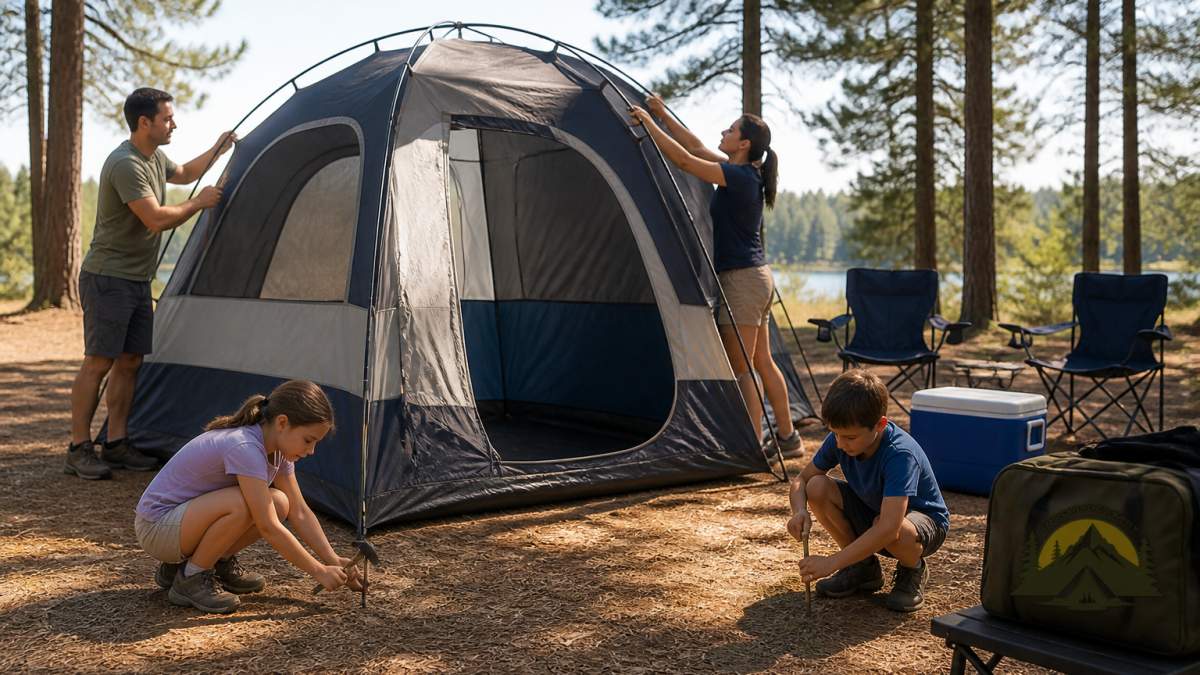
Size guidance by family:
- Two adults, one child: four-person tent
- Two adults, two children: six-person tent
- Two adults, three or more children: eight-person tent or two smaller tents
A common mistake is buying exactly your family size. In practice, that leaves no room for gear and makes rainy days miserable. Look for a full rainfly, taped seams, and a vestibule for boots. Instant tents cost more but set up in minutes, which matters when you arrive at dusk.
Sleep Systems: Camping Sleeping Bags for Kids
Sleep is where family camping succeeds or fails. A cold, uncomfortable child wakes the whole tent, so treat bags and pads as a system rather than two separate purchases.
Temperature ratings, explained. A sleeping bag's rating is a comfort estimate, not a guarantee. Most manufacturers publish a lower limit (the coldest temperature a warm sleeper can survive) and a comfort rating (the temperature a cold sleeper stays comfortable). Children lose heat faster than adults because they have more surface area relative to body mass, so choose a bag whose comfort rating sits about 10 degrees Fahrenheit below the forecast low. A bag rated to 30°F comfort is a reasonable three-season choice for most kids; a 20°F bag extends trips into late fall.
Shape and size by age.
- Toddlers and preschoolers: rectangular bags are roomier and easier to climb into, and many convert to a quilt for cot use. Avoid mummy bags, the tapered foot box frustrates small kids.
- Ages 5-8: rectangular or semi-rectangular bags with a full-length zipper they can open themselves. A bag slightly longer than the child is fine; growing room beats a tight fit.
- Ages 9-12: semi-rectangular bags save weight without feeling restrictive. This is also the age to introduce a stuff sack the child packs themselves.
- Teens: a mummy bag with a hood is worth the upgrade for colder trips and backpacking.
Pads matter as much as bags. The ground pulls heat from small bodies all night. Look for an insulated pad with an R-value of at least 3 for three-season camping and 4 or higher for cold-weather trips. Closed-cell foam pads are cheap, indestructible, and warm but bulky; self-inflating pads balance comfort and pack size; air pads are the most compact but cost more and can puncture. For toddlers, a portable cot or a thick self-inflating pad keeps them off cold ground and out of puddles.
Family-size sleep math. A family of four needs four bags, four pads, and four pillows, plus a plan for the gear that doesn't fit in the tent. Two adults and two kids fit comfortably in a six-person tent only if pads are narrow (about 20 inches wide) and duffels stay in the vestibule. If anyone uses a wide (25-inch) pad, size up the tent or plan to store bags in the car.
Kid-specific features worth paying for:
- Easy-open zippers kids can manage alone, including a two-way zipper that vents at the foot
- Machine-washable lining for spills and accidents
- Draft collar and hood on colder-rated bags
- Glow-in-the-dark zipper pulls so kids can find the door at night
A camping sleeping bag for kids that's slightly too large works better than one that's too small, growing room plus a warm, insulated pad keeps everyone rested. Pair each child with a camping pillow and a labeled stuff sack so bedtime doesn't turn into a gear hunt.
Family Camping Cooking Gear and Meal Prep
Family camping cooking gear should feed everyone in one round. A two-burner camp stove plus a nesting cooking set handles most family meals, and a folding table gives you prep space away from the fire.
Plan meals before you pack. Meal preparation at camp goes faster when ingredients are prepped at home: chop vegetables, pre-mix spices, and freeze what you can. A camp stove with wind protection keeps dinner on schedule.
Our recommended cooking kit:
- Two-burner camp stove with fuel
- Nesting pots and pans with a cooking set
- Pocket knife and utensils
- Fire starter and waterproof matches
- Cooler with ice or freezer packs
- Biodegradable soap and a wash basin
A camp chair and folding table turn a rough site into a real dining area, which keeps kids at the table instead of wandering.
Lighting, Fire Starters, and Safety Supplies
Lighting and safety supplies are the gear families forget until they need them. Pack a lantern for the picnic table, a flashlight per person, and a headlamp for late bathroom trips.
Fire-starting tools belong in every kit: a fire starter, waterproof matches, and a pocket knife. Teach kids fire safety rules before the trip, and keep matches stored away from children.
Safety supplies to pack:
- First-aid kit with kid-friendly supplies
- Whistle for each child
- Sunscreen and insect repellent
- Emergency blanket
- Weather protection layers
A first-aid kit and safety supplies aren't optional with children. Check the CDC guidance on outdoor safety for current recommendations on insect repellent and sun protection before you go.
Your Family Camping Checklist and Kids Camping Checklist
A family camping checklist prevents the midnight "we forgot the sleeping bags" moment. Build one master list, save it, and update it after every trip.
The National Park Service camping resources offer a solid starting point for trip planning and campground rules.
Family camping checklist:
- Tent, stakes, mallet, and footprint
- Sleeping bags, pads, and pillows for each person
- Camp stove, fuel, cooking set, and utensils
- Cooler, food, and water containers
- Lantern, flashlights, and extra batteries
- First-aid kit and safety supplies
- Rain jackets, ponchos, and rain boots
- Toiletry kit and personal hygiene items
- Portable shower or wipes
- Storage bins for organization
Kids camping checklist:
- Sleeping bag and camping pillow
- Weather protection layers and rain boots
- Headlamp or flashlight
- Favorite comfort item and pajamas
- Toiletry kit and toothbrush
- Sunscreen and insect repellent
- Camp chair sized for kids
- Whistle and emergency contact card
Budget Tiers and Gear by Child Age
Most family-gear lists tell you what to buy but not what it costs or where to save. This section provides guidance on what to borrow, buy used, or skip entirely.
Budget tiers (per family of four, one-time gear cost):
| Tier | Approach | Typical Outlay | Best For |
|---|---|---|---|
| Entry | Basic dome tent, standard rectangular bags, foam pads, single-burner stove, battery lanterns | Roughly $400-$700 | First family trips, trying camping out |
| Mid | Instant or six-person dome tent, insulated pads, two-burner stove, rechargeable lanterns and headlamps | Roughly $800-$1,400 | Regular weekend campers |
| Premium | Large cabin tent, cold-rated bags, high-R pads, full cooking set, camp chairs and table | Roughly $1,500-$2,500+ | Extended trips, cold-weather camping |
These ranges assume you're buying new. The biggest savings come from borrowing or buying used:
- Borrow first: tents, camp stoves, coolers, and lanterns are common hand-me-downs. Ask family and friends before buying, a borrowed tent for the first trip tells you whether your family enjoys camping at all.
- Buy used: tents, camp chairs, coolers, and cooking sets hold up well used. Inspect tent seams, zippers, and the rainfly for tears; check stove fuel lines and seals.
- Buy new: sleeping bags and pads (hygiene and loft loss), first-aid kits, and anything safety-critical.
- Skip for now: portable showers, fancy camp kitchens, and dedicated kids' camping furniture. A folding table and a tarp cover most of the same needs.
Total trip cost, not just gear cost. Gear is a one-time purchase; the trip itself has recurring costs. Budget for campsite fees (public campgrounds commonly run $15-$40 per night, private campgrounds more), fuel, food, and firewood (buy local to avoid moving invasive pests).
Gear by child age:
- Toddlers: prioritize a large tent, warm bags, and a portable cot. Skip kid-sized chairs, they'll use your lap.
- Ages 5-8: add headlamps, kid-sized camp chairs, and simple fire-safety rules. This is the age to buy their own flashlight.
- Ages 9-12: introduce their own pocket knife (with supervision), a whistle, and a personal stuff sack. Let them pack their own bin.
- Teens: give them a personal sleeping pad and bag, and let them choose between a tent of their own or sharing.
Car camping versus backpacking. The tier you choose depends on how you'll camp. Car camping families can prioritize comfort and interior space, a heavier cabin tent, a two-burner stove, and a full cooler all make sense when the vehicle carries the load. Backpacking families trade size for weight: a lighter tent and compact pads cost more but carry easier, and every ounce counts when kids are carrying their own packs. A common pattern is to own car-camping gear first and add lightweight pieces only when a backpacking trip is actually planned.
At Camp Cave Forest Supply, we curate gear so families can start simple and upgrade as kids grow. If you're unsure what fits your family's size and budget, reach out before you buy and a real person will help you choose.
Frequently Asked Questions
What size tent does a family need?
Plan for at least one sleeping pad-width per person plus gear space. A four-person family typically fits a six-person dome tent, and a family of five should look at an eight-person model. Instant tents cost more but set up faster, which matters when you arrive after dark with tired kids. Check the tent's floor dimensions in feet against your sleeping pads before buying, and leave room for duffel bags.
What sleeping gear is best for kids camping?
Choose camping sleeping bags for kids rated for the lowest overnight temperature you expect, with a hood and a draft collar to trap warmth. Kid-sized bags keep small bodies from sliding into cold corners, and a closed-cell foam pad underneath adds insulation. Bring a camping pillow and a favorite blanket for comfort. Test the bag at home first so your child gets used to the feel before the trip.
What should a family pack for a camping trip?
Start with shelter, sleep, and cooking: a tent with a footprint, sleeping bags and pads, a camp stove with fuel, and a cooking set. Add lighting, a first-aid kit, rain jackets, and a toiletry kit. Use a family camping checklist so nothing gets left behind, and give each child a small bag with their own flashlight and layers. Pack one change of clothes per day plus a warm layer.
What camping gear can families skip?
Skip gear you will not use on a short car camping trip: backpacking stoves, ultralight pads, and specialty gadgets add cost without helping. You also do not need a full portable shower for a weekend, and heavy camp chairs are fine since you are not carrying them far. Rent or borrow big-ticket items like a large tent before committing, then buy what your family actually uses.
Family camping trips fail on the details: a tent one size too small, a bag rated for the wrong season, a first-aid kit left at home. Camp Cave Forest Supply helps you avoid those mistakes with a curated selection of tents, sleeping bags, cooking gear, and safety supplies, plus a customer service team that answers real questions before you order. Shop now and get your family's gear ready for the next outdoor getaway.