 Listicle
Best Camping Gear for Beginner Families: Starter Kit Guide
Quick Summary
The best camping gear for beginner families is a short list of essentials that keep everyone dry, warm, fed, and rested. Buy shelter first, then sleep gear, then light, cooking, and weather protection. Size the tent one step up from your headcount so gear fits inside.
- Buy a family-sized tent first, and go one size up if you are between sizes.
- Choose sleeping pads with enough insulation, rated by R-value, for every sleeper including kids.
- Match each sleeping bag to the coldest night you expect, then add margin.
- Give every person their own headlamp and carry spare batteries for each device.
- Set up the tent and test the sleep system at home before the first trip.
Table of Contents
- What Beginner Families Actually Need to Buy First
- Shelter: Choosing a Family Tent and Sleeping Capacity
- Sleep Systems for Adults and Kids: Bags, Pads, and Cots
- Camp Cooking, Lighting, and Weather Gear for Changing Conditions
- Camping Equipment List by Budget Tier and Family Size
- The Family Camping Checklist PDF: What to Print and Pack
- Most Forgotten Camping Items Families Overlook
- Test Your Setup Before Your First Trip with Camp Cave Forest Supply
- Frequently Asked Questions
Best Camping Gear for Beginner Families: Starter Kit Guide
Last Updated: November 14, 2026
What Beginner Families Actually Need to Buy First
This starter kit guide is written for families new to camping. The best camping gear for beginner families is not the most expensive stuff, it is the essentials that keep everyone dry, warm, fed, and rested. Buy in that order: shelter first, sleep second, then light, cooking, and weather protection.
Start with a short list rather than a cart full of gadgets. Most first trips fail because of comfort problems, not a missing fancy stove. A cold child who could not sleep will ruin the weekend faster than a missing camp chair.
Starter priorities, in order:
- A tent sized for your family, plus a footprint or ground tarp
- Sleeping bags rated for the coldest night you expect
- Sleeping pads for every sleeper, adults and kids
- A reliable light source for each person
- A basic camp stove and cookware
- Layers, rain gear, and sun protection
Consider skipping the full camp kitchen and large cooler on day one. Borrow what you can from friends first to learn what your family actually uses.
Shelter: Choosing a Family Tent and Sleeping Capacity
A tent is the biggest decision for beginner families, and sleeping capacity is where most people go wrong. Labels overstate comfortable space: a "4-person" tent often fits four bags shoulder to shoulder with no room for gear. For a family of four, a 6-person tent gives room for bags, bins, and movement.
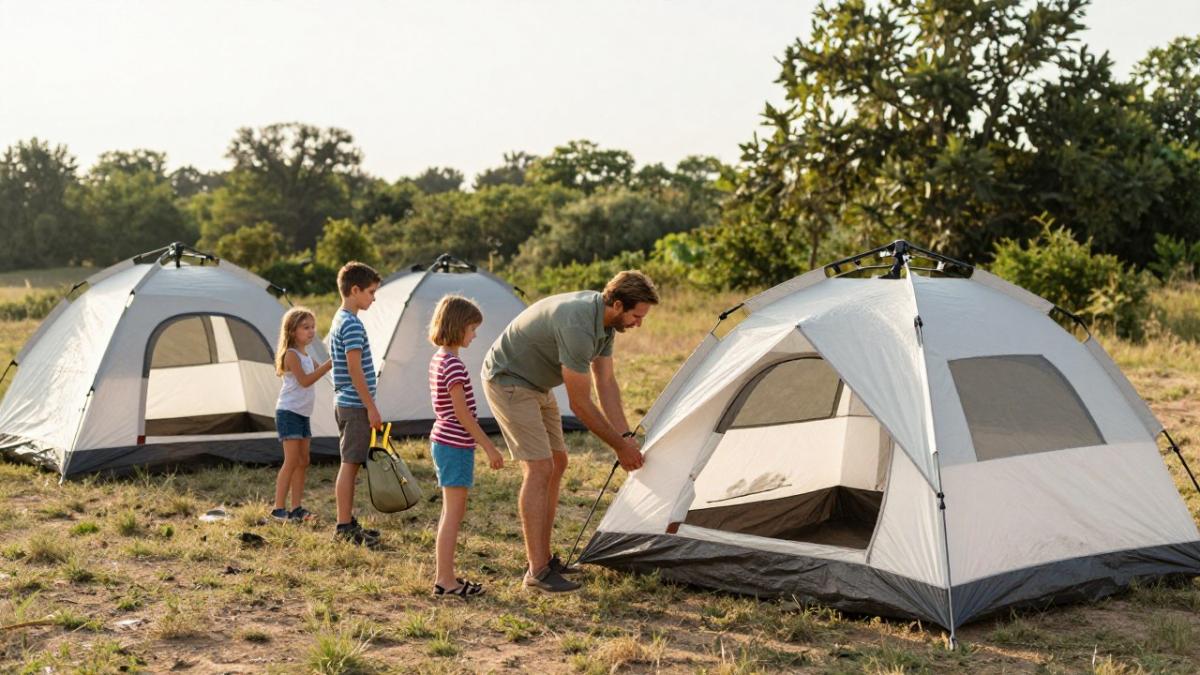
Set up the tent once in your yard before your first trip to confirm the family can pitch it in daylight and that a tent that looked roomy online is not cramped in practice.
| Family Size | Suggested Tent Size | Why |
|---|---|---|
| 2 adults | 2-person | Enough room for two bags and a few bins |
| 2 adults + 1-2 kids | 4-person | Comfortable with gear inside |
| 2 adults + 2+ kids | 6-person | Space for bags, bins, and movement |
Watch out: a tent that is too small is the most common beginner mistake. If you are between sizes, go one size up.
Sleep Systems for Adults and Kids: Bags, Pads, and Cots
Sleep is the make-or-break part of a first family trip.
Start with the pad, not the bag. Cold ground pulls heat out of a sleeper faster than cold air, so everyone, including kids, needs a pad with enough insulation.
For adults, a self-inflating camping mattress is an easy beginner upgrade. If someone in your group wants to sleep off the ground entirely, a camp cot is an option to consider. Cots sleep cooler than pads because air moves underneath, so pair a cot with an insulated pad in cool weather.
Match the bag to the coldest night you expect, then add margin. Bags carry a comfort rating and a lower-limit rating; the comfort rating matters for a family trip because it describes where an average sleeper stays comfortable.
Children's bags need extra attention. For babies and toddlers, many families skip mummy bags and use a sleep sack or warm fleece suit inside a parent's bag or small quilt, since loose bags can ride up over a small face.
Watch out: a bag rated for adults does not automatically fit a child. A bag that is too long has dead air space at the feet that stays cold, and a bag that is too wide lets warmth escape. Look for kids' bags sized to the child's height, or plan to cinch and layer.
Layer for sleep the same way you layer for the day. Synthetic or wool base layers, dry socks, and a hat matter more than upgrading the bag. Avoid cotton pajamas, which hold moisture and feel cold. A bag liner adds a few degrees and is easier to wash than the bag.
Pillows and comfort items matter more for kids than adults admit. A camp pillow or stuff sack filled with a jacket gives a child a familiar anchor, and a favorite blanket or small stuffed animal helps a first night feel normal.
Test the sleep system at home. Have each child lie on their pad in their bag in the living room or backyard for an hour to learn whether the pad is wide enough, the bag zips without pinching, and anyone rolls off. Fix those problems before the trip, not at midnight.
Camp Cooking, Lighting, and Weather Gear for Changing Conditions
Cooking, light, and weather protection are where beginner families either settle into a rhythm or spend the trip fighting their gear. The goal is not a full camp kitchen but a simple, reliable setup that works in wind, rain, and dark.
Cooking: pick one stove that matches how you actually eat. For a small family, a compact canister stove handles boiling water and one-pot meals. Canister stoves are fast and easy but less efficient in cold and require packing out empty canisters. Liquid-fuel stoves burn hotter in cold but add priming and maintenance that frustrate beginners.
A folding table, a dish tub, and a storage bin cover most basic camp kitchen needs for far less than a full all-in-one camp kitchen.
Plan meals that survive a bad night. One-pot meals, pre-cut vegetables, and a backup no-cook dinner (sandwiches, tortillas, peanut butter) save a trip when rain or a late arrival kills the cooking plan.
Lighting: give every person their own light and a backup. Headlamps keep hands free for zipping tents, cooking, and finding the bathroom in the dark, and a second headlamp per adult is cheap insurance. A central lantern makes the picnic table usable after sunset.
Watch out: a single lantern for the whole family is the most common lighting mistake. When it dies or gets misplaced, everyone is in the dark. Pack spare batteries sized to each device and know which devices share a battery size.
Weather: pack for the forecast and one step worse. Kids feel cold and wet sooner than adults, so build layers that work together: a moisture-moving base layer, an insulating mid layer, and a rain shell. Cotton stays wet and cold, so choose synthetic or wool for kids and adults.
Read the conditions, not just the temperature. Wind makes a 50-degree evening feel much colder, and rain strips warmth faster than dry cold. A tarp rigged over the picnic table gives the family a dry place to eat and wait out a shower, and it is one of the cheapest pieces of gear you can add.
Keep a small repair and backup kit. A pad patch, spare stake, length of cord, and a few zip ties fix most first-trip gear failures. A backup light and a backup dinner plan cover the two failures that most often end a family evening early.
Camping Equipment List by Budget Tier and Family Size
Budget matters, and so does family size. A family of four can build a workable starter kit with a modest budget if they buy in stages. Below is a rough way to think about tiers. The supplied research does not provide exact totals for every product, so treat these as planning categories rather than quotes.
| Tier | Focus | Typical Items |
|---|---|---|
| Essentials | Get outside safely | Tent, sleeping bags, pads, headlamps, first-aid kit |
| Comfort | Make nights easier | Cot or thicker pad, camp chairs, lantern, cooler |
| Full setup | Cook and organize like a pro | Camp kitchen, stove, larger tent, storage bins |
For family size:
- Two kids or fewer: the essentials tier with one stove and one lantern covers most trips.
- Three or more kids: budget for a larger tent and extra sleep gear before adding comfort items.
Pricing depends on brand, quantity, and where you buy. For current prices and availability, check the product pages on our website.
The Family Camping Checklist PDF: What to Print and Pack
A printed checklist keeps everyone honest. Build yours around the categories above, then add family-specific items like favorite blankets, toys, games, and glow sticks for bedtime. Print one copy for the car and keep a digital copy on your phone.
Our suggested checklist sections:
- Shelter: tent, stakes, mallet, footprint or tarp
- Sleep: bags, pads, pillows, camp blankets
- Light: headlamps, flashlight, lantern, spare batteries
- Kitchen: stove, fuel, pot, utensils, cooler, water
- Clothing: base layers, warm layers, rain gear, hats, sunscreen
- Hygiene: first-aid kit, toilet paper, biodegradable soap, hand sanitizer
- Kids: potty or portable toilet, small backpack, water play gear
Tick items off the night before you leave. Most missed items turn up on the first evening.
Most Forgotten Camping Items Families Overlook
Experienced families forget the same small things. Pack these on purpose:
- Extra batteries for every headlamp and flashlight
- A tarp to shelter gear and the picnic area from rain
- Hand warmers for chilly evenings and early mornings
- Toilet paper and a trowel or portable toilet for kids
- Bug spray and a head net for dusk and early morning
- A camp pillow so kids sleep better
- Trash bags and a plan for packing out garbage
- Spare clothes in a dry bag
The single most overlooked item is a dry bag. Wet clothes can make a cold, rainy night miserable, so keep one set of dry clothes sealed and ready.
Test Your Setup Before Your First Trip with Camp Cave Forest Supply
Set up your tent, lay out your sleep system, and light your stove once at home. This takes an hour and prevents most first-trip surprises. Have kids practice zipping the tent door and finding their headlamp in the dark, and fix any missing stake or broken pole before you leave.
If you are building your first kit, browse the product pages to compare sizes and features, and contact customer service with questions about sizing, sleep warmth, and what to pack for a first trip. Set up a test run at home, and you will head out with confidence.
BUTTON: Shop Family Camping Gear CARD_TITLE: Ready to pack your first family kit? CARD_TEXT: Camp Cave Forest Supply offers tents, sleep gear, and cooking essentials for beginner families.
Frequently Asked Questions
What is the best camping gear for a beginner?
For most beginners, the essentials are a tent sized one person larger than your group, a sleeping bag rated for the coldest night you expect, a sleeping pad, a headlamp with spare batteries, a camp stove, and layered clothing. Start with these shelter and sleep items before buying extras like camp chairs or a camp kitchen. Buying a few core pieces well, rather than a full kit of cheap items, usually gives beginner families the best results on their first trips.
What are the must-haves for camping with family?
A family camping setup needs a tent with enough sleeping room for everyone, sleeping bags and pads sized for each family member including children, reliable lighting such as a lantern and flashlights, sun protection with sunscreen and a sun hat, insect protection, and a first-aid kit. Add a camp cot or air mattress for comfort and warm layers for changing weather. Children's sleeping bags and a potty or extra toilet paper are also common must-haves for young kids.
What should a family pack for its first camping trip?
Pack the shelter, sleep system, lighting, and clothing first, then add a camp kitchen basics kit with cookware, biodegradable soap, and water containers. Bring a family camping checklist PDF to tick items off before you leave, and include extra batteries, rain gear, and hand warmers if the forecast is uncertain. Keep a short list of comfort items such as games, glow sticks, and kids' backpacks so the trip stays enjoyable for everyone.
What are the most forgotten items on a family camping trip?
Families often forget spare batteries, a tarp or ground cover, extra toilet paper, hand sanitizer, a first-aid kit, sunglasses, and a sun hat. Many also overlook a backup light source, a way to charge phones, and extra clothing for kids who get wet or dirty. Checking your packing list against a camping equipment list one day before departure catches most of these gaps.