 Listicle
7 Reliable Survival Gear Essentials for Digital Nomads
Quick Summary
Reliable survival gear for digital nomads is one unified kit that keeps you working and safe. Pair a high-capacity power bank for daily carry with a portable power station for multi-day outages, then add a headlamp, first-aid kit, emergency blanket and fire starter. Keep your core kit light and adapt it to each destination.
- Size your carry power to cover one full workday plus a buffer.
- A high-capacity power bank of about 20,000 to 27,000 mAh is the daily carry baseline.
- Charge phone first, then headlamp, then laptop, when power is limited.
- Keep backup power to cover at least 24 hours of communications and lighting.
- Test a backup restore and replace expired first-aid supplies every six months.
Table of Contents
- Why Digital Nomads Need a Survival Kit That Also Works for Remote Work
- Building One Unified Kit for Work and Emergencies
- Power Resilience: Keeping Devices Alive During Extended Outages
- Lightweight Emergency Gear for Travel: Shelter, Warmth and Fire
- Choosing a Remote Area Survival Pack and Packing Order
- Digital Nomad Packing List: Core Items by Category
- Protecting Your Data, Maintaining Gear and Planning for Each Destination
- Building Your Kit: Your Next Steps with Camp Cave Forest Supply
- Frequently Asked Questions
Why Digital Nomads Need a Survival Kit That Also Works for Remote Work
Most digital nomads carry a laptop, a phone and a couple of chargers, then assume that covers them. It doesn't. A dead battery during a power cut, a dropped connection in a rural town or a night stranded on a forest road can cost more than a missed deadline.
A survival kit and a remote work kit are usually treated as two separate loads. Most nomads end up with a pile of gear that does one job well and nothing else. The better approach is one kit that handles both, with each item earning its place in the bag.
Generic gear lists tend to stop at laptops and headphones. They rarely address what happens when the Wi-Fi drops, the grid goes down or you're several hours from the nearest town. That gap is where this guide focuses.
Building One Unified Kit for Work and Emergencies
A unified kit starts with a simple rule: every item should either keep you productive or keep you safe, and ideally both. A compact flashlight or headlamp is a good example. It lights up a dark hostel hallway and a campsite at night, and it's the first tool you'll reach for during a blackout.
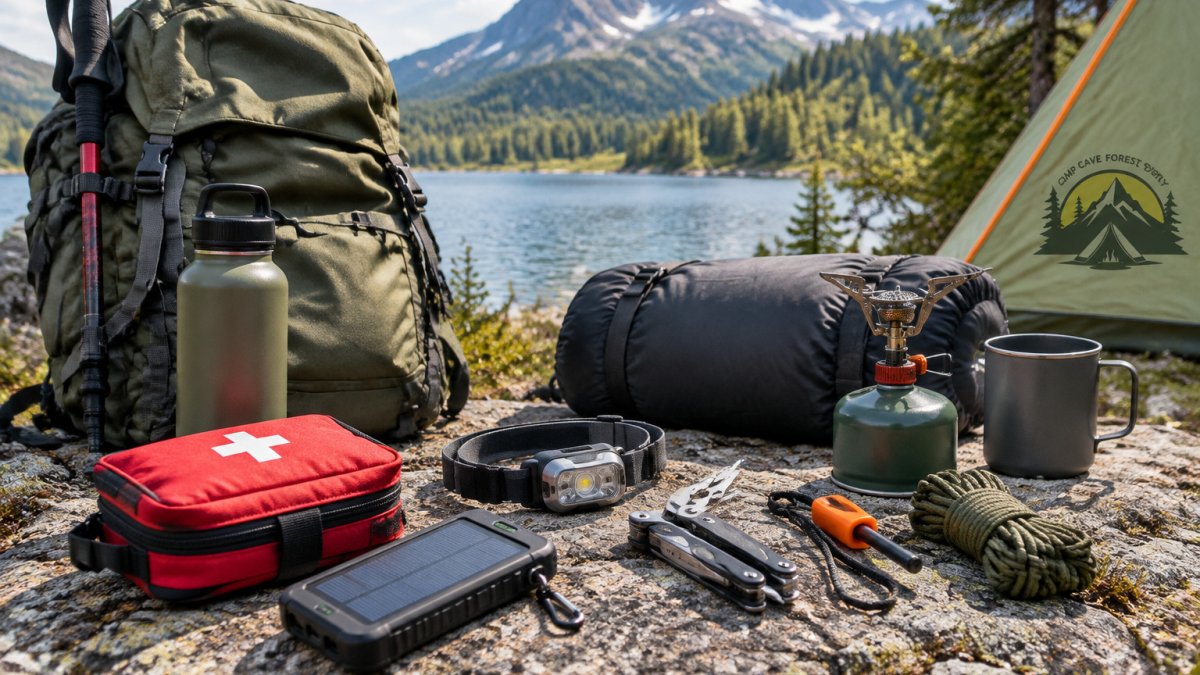
Sorting gear into three groups, work essentials, safety basics and backup items, keeps a kit easy to review. Work essentials include your laptop, charger and phone. Safety basics include a headlamp, a first-aid kit and a way to start a fire. Backup items cover a spare battery, paper maps and a basic water purification method.
Watch out: a kit that's too heavy will stay in the closet. Keep the total weight low enough that you'll actually carry it every day.
Power Resilience: Keeping Devices Alive During Extended Outages
Power is the single biggest point of failure for a remote worker. Phones, laptops and cameras all depend on it, and a multi-day outage can end a work week before it starts. The fix is not one bigger battery; it is a small system sized to your real devices, with a clear priority order when supply runs short.
Size the system to your actual load
Start by listing what you plug in on a working day and how many watt-hours each device needs. Watt-hours (Wh) are the common currency across power banks and power stations, so convert everything to that unit before you shop.
- Laptop. A typical ultraportable draws roughly 50 to 70 Wh for a full charge; a larger creative laptop can draw 90 to 100 Wh or more. Check the watt-hour rating on your own power supply rather than guessing.
- Phone. A modern phone battery is usually in the 15 to 25 Wh range, and a full charge from a bank costs somewhat more than that because of conversion losses.
- Camera, tablet, headphones and watch. Add each device's battery capacity, then add a buffer for charging inefficiency.
A practical rule most travelers converge on: size your carry power to cover one full workday plus a buffer, and size your backup power to cover at least 24 hours of communications and lighting if mains power disappears.
Match the tool to the outage length
- High-capacity power bank (roughly 20,000 to 27,000 mAh, or about 70 to 100 Wh). This is the daily carry baseline. It will typically recharge a phone several times and top up a laptop once, depending on the laptop. The Anker 737 Power Bank (GaNPrime) is widely recommended for nomads who need to keep a laptop and phone running on the go (TrueScope Reviews' Digital Nomad Tech Essentials guide). Keep it under the airline carry-on limit for lithium batteries, which is commonly expressed in watt-hours rather than mAh, so check the Wh figure on the label.
- Portable power station (roughly 200 to 500 Wh). A anchor: 200W portable power station for CPAP, laptops and devices can run a laptop, tablet and small appliances through a full work session and still have headroom. This is the right tier for a multi-day outage in an apartment or a remote rental where you can recharge from mains between uses.
- Larger solar generator (roughly 500 Wh and up). A solar generator with a higher-capacity battery gives you more runtime and the option to recharge from a folding panel, but it is heavier, costs more, and solar input is weather-dependent. Treat solar as a supplement for extended off-grid stretches, not as your primary plan for a city outage.
Watch out: panel wattage and real-world solar yield are not the same thing. Cloud, shade, panel angle and short winter days can cut output sharply, so do not plan to run a workday from solar alone unless you have tested the setup.
Set a charging priority order
When supply is limited, charge in this order and stick to it:
- Phone and communications. A charged phone is your link to work, maps, banking and emergency services.
- Headlamp and lighting. Light is safety and productivity after dark.
- Laptop. Charge only what you need for the next work block rather than topping to 100 percent.
- Everything else. Cameras, tablets and accessories come last.
A few habits stretch runtime further: charge devices during the day when you have mains access, keep power banks out of direct heat and out of freezing conditions, and turn off background sync and high-brightness screens when running on backup power. A disciplined priority order can stretch usable hours further than a slightly larger battery.
Here is how the power options compare, based on the capacities and uses covered above.
| Tool | Rough capacity | Best for |
|---|---|---|
| High-capacity power bank | About 20,000 to 27,000 mAh (about 70 to 100 Wh) | Daily carry; recharges a phone several times |
| Portable power station | About 200 to 500 Wh | Multi-day outages; running a laptop through a work session |
| Larger solar generator | About 500 Wh and up | Extended off-grid stretches; supplement only |
| Laptop (typical) | About 50 to 70 Wh per full charge | Sizing your daily carry power |
Lightweight Emergency Gear for Travel: Shelter, Warmth and Fire
Travel gear needs to be light, compact and quick to deploy. Four categories matter most: warmth, shelter, fire and light.
Emergency blankets are the cheapest way to hold heat in. A pack of compact emergency solar blankets fits in a jacket pocket and weighs almost nothing. For a more complete option, a lightweight emergency shelter gives you protection from wind and rain if you're stuck overnight.
The UST Survival Blanket 2.0 and the SOL Thermal Bivvy are both named among Trailspace's survival-gear picks (Trailspace's survival gear guide). Check their current specifications before you buy, since the sources we reviewed did not list dimensions or prices.
Choosing a Remote Area Survival Pack and Packing Order
A remote area survival pack works best when it's organized by urgency. Put the items you'd need in the first minute at the top: headlamp, water, first-aid kit and phone.
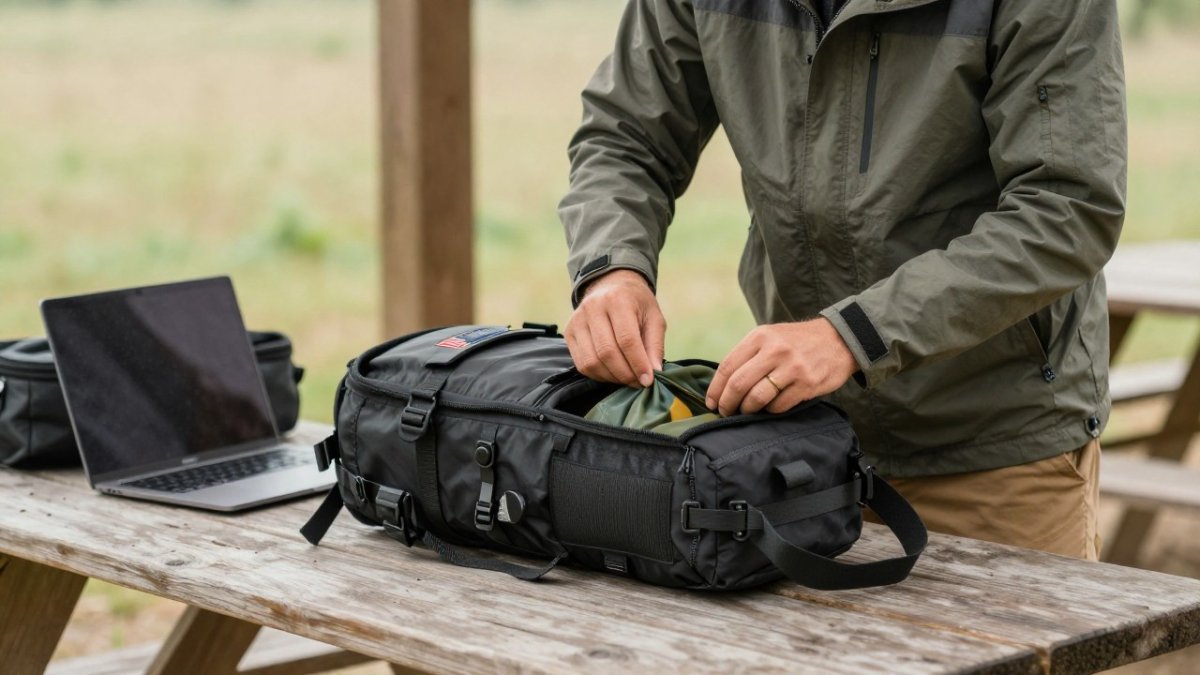
The EVERLIT Storm II is a pre-built kit that includes a tactical backpack and first-aid supplies.
Watch out: don't store your survival items at the bottom of a laptop bag. You'll need them fast, and they should be reachable without unpacking everything.
Digital Nomad Packing List: Core Items by Category
A packing list is easier to manage when it's broken into categories. Here is a working list you can adapt:
- Work: laptop, charger, phone, spare cable, power bank
- Power: portable power station or high-capacity power bank, solar charger if needed
- Carry: a durable pack; Osprey backpacks are widely recognized for reliable, comfortable carrying (Gyl Golden's travel gear guide)
Review the list before each trip and remove anything you haven't used in the last three.
Protecting Your Data, Maintaining Gear and Planning for Each Destination
Most gear guides treat data, maintenance and destination planning as afterthoughts. For a full look at gear that holds up on the road, see reliable camping gear for nomads. For a digital nomad, they are the three variables that decide whether a kit actually holds up over months of travel. Treat this section as the operating manual for everything else in the bag.
Data security and recovery
A lost laptop is a gear problem. A lost laptop with no backup is a business problem. Build redundancy in three layers so no single failure ends your work week.
- Encrypted cloud backup. Use a service with client-side encryption and version history, and confirm the backup runs on a schedule rather than only when you remember. Test a restore of a single file once a month so you know the backup is real.
- Offline copy. Carry a small encrypted USB drive or portable SSD with your current project files and a copy of your passport, visa, insurance policy and emergency contacts. Store it separately from your laptop so a single theft does not take both.
- Account recovery. Enable two-factor authentication on email, banking and cloud accounts, and keep recovery codes somewhere other than the device they protect. A phone-based authenticator is convenient until the phone is gone.
Watch out: a backup you have never restored is a guess, not a backup. Run a test restore before every long trip.
Maintenance, testing and replacement
Gear fails in predictable ways, and the failure usually shows up at the worst moment. Put the following on a recurring calendar so it happens before a trip rather than during one.
- Power banks and power stations. Recharge to roughly 50 percent for storage, then top up before travel. Check that each port still delivers a charge and that the capacity indicator matches expected runtime. Most lithium cells lose noticeable capacity after a few hundred full cycles, so a bank that once ran your laptop for a full workday may no longer do so.
- Headlamps and flashlights. Test on the brightest setting and check for corroded contacts. Remove batteries from devices you will not use for weeks to prevent leakage.
- Fire starters. Stormproof matches and firesteels are durable, but ferro rods wear down and matches absorb moisture. Test one strike per trip and replace the kit if it fails.
A simple rule: anything you have not used or tested in the last three months gets reviewed before the next trip, and anything that fails a test gets replaced rather than packed 'just in case.'
Destination-specific risk planning
There is no universal kit. The same bag that works in a temperate city can be wrong in a desert, a monsoon zone or a high-altitude town.
- Urban travel with reliable infrastructure. Prioritize power banks, a compact headlamp, a first-aid kit and data security. You can buy water and food easily, so carry a small purification method rather than a large filter.
- Remote or low-infrastructure areas. Add water purification capacity, a paper map and compass as a backup to offline maps, a fire starter, an emergency shelter and enough power to run communications for at least 24 hours without mains electricity.
- Climate extremes. Hot, dry destinations call for more water capacity, sun protection and electrolyte supplies. Cold, wet destinations call for insulation layers, a waterproof shell and a reliable fire method, since wet conditions defeat many starters.
One practical approach is to keep a core kit that stays the same and a destination module that swaps in and out: a water module for remote trips, a warmth module for cold climates, a sun module for deserts.
Building Your Kit: Your Next Steps with Camp Cave Forest Supply
Start with the essentials: a reliable power bank, a headlamp, an emergency blanket and a first-aid kit. Add larger items as your trips get longer. Camp Cave Forest Supply offers camping, hiking and survival gear, and our customer service team can help you choose items for your trip. For current prices or a quote, visit our website.
Last Updated: November 21, 2026
Frequently Asked Questions
What is the best gear for digital nomads?
The best gear depends on where you travel, but most nomads need a reliable laptop bag, a high-capacity power bank, a headlamp, and a compact first-aid kit. Pricing varies widely by brand and quantity, so check Camp Cave Forest Supply's website for current prices or a quote before you buy. Prioritize items that do double duty, such as a pack that carries both work equipment and emergency supplies, since weight and space are the constraints you will feel most on the road.
How do you choose reliable survival gear for long-term travel?
Start with the failures you are most likely to face: loss of power, loss of water, cold exposure, and injury. Choose items that are durable, lightweight, and simple to use without instructions, such as stormproof matches or a firesteel. Test each item before you leave, check expiration dates on medical supplies and batteries, and replace anything that has degraded. Reliability matters more than having many items, so a smaller kit you know well beats a large one you have never tried.
What emergency supplies should fit in a digital nomad's backpack?
A practical emergency layer includes a survival blanket, a thermal emergency bivvy, a firesteel or stormproof matches, hand warmers, a headlamp with spare batteries, a basic first-aid kit, and a water filter. Keep these in a dedicated pouch so they are easy to reach. Pre-built kits can cover the basics, though you should confirm the full contents before purchase.
How can digital nomads build a lightweight survival kit?
Focus on multi-purpose items and skip anything that duplicates what you already carry. A compact survival blanket, a firesteel, a multitool, and a small first-aid kit cover most scenarios without adding significant weight. Store power and cables in one organized pouch, and remove items you have not needed on previous trips. Check Camp Cave Forest Supply's site for current prices and availability, since exact costs depend on quantity and delivery.