 Comparison
Reliable Camping Gear for Nomads: What Holds Up on the Road
Last Updated: November 12, 2026
Quick Summary
Reliable camping gear for nomads is equipment that keeps working after months of packing, weather exposure and rough roads. The best choices have repairable parts, sensible warranties, and packed sizes that fit your vehicle or pack. Match each item to how you actually travel, not to a single weekend trip.
- Check zippers, buckles, pole joints, seams and attachment points, since these take the most stress.
- Look for replacement parts and clear care instructions as signs a manufacturer expects long use.
- Confirm packed dimensions and weight, because listed packed size is often the smallest possible.
- Spend the largest share of your core budget on the shelter, since a torn fly or broken pole ends trips.
- Favor a limited lifetime warranty on seams and poles over a one-year general warranty for full-time use.
Table of Contents
- What Makes Camping Gear Reliable for Nomads
- Compact Camping Gear for Nomads: Shelter and Sleep Picks
- Durable Camping Gear for Long-Term Travel: Comparison Table and Pros and Cons
- Lightweight Camping Gear Checklist for Nomads
- Budget Hiking Gear List: Spending Smart Without Cutting Reliability
- Choosing Your First Setup and Getting Help Before You Buy
- Frequently Asked Questions
What Makes Camping Gear Reliable for Nomads
Reliable camping gear for nomads is equipment that keeps working after months of packing, unpacking, weather exposure and rough roads. For someone living out of a vehicle, a failed zipper or a cracked pole is not a weekend inconvenience.
Most nomads already know the basics. The harder question is which features matter after the honeymoon phase wears off. A tent that pitches in ten minutes at a store can take twenty in a rainstorm with cold fingers.
Durability and Long-Term Use
Durability is the trait nomads feel most, and it is also the hardest to see on a product page. Look at the parts that take the most stress: zippers, buckles, pole joints, seams and attachment points.
Checking how a product is repaired before you buy is a sound habit. Replacement parts, warranty terms and clear care instructions are signs that a manufacturer expects the item to last.
Portability and Pack Size
Portability decides whether gear actually gets used. A shelter that fills a truck bed or a sleep system that needs a full duffel will often be left at home.
Watch out: packed size on a listing is often the smallest size the item can be compressed to, not the size it sits in a bag after a few trips. Leave some room in your storage plan.
Compact Camping Gear for Nomads: Shelter and Sleep Picks
The right shelter and sleep setup depends on how you travel. A backpacker needs something light enough to carry for hours. A vehicle-based nomad can accept more bulk in exchange for comfort and quicker setup.
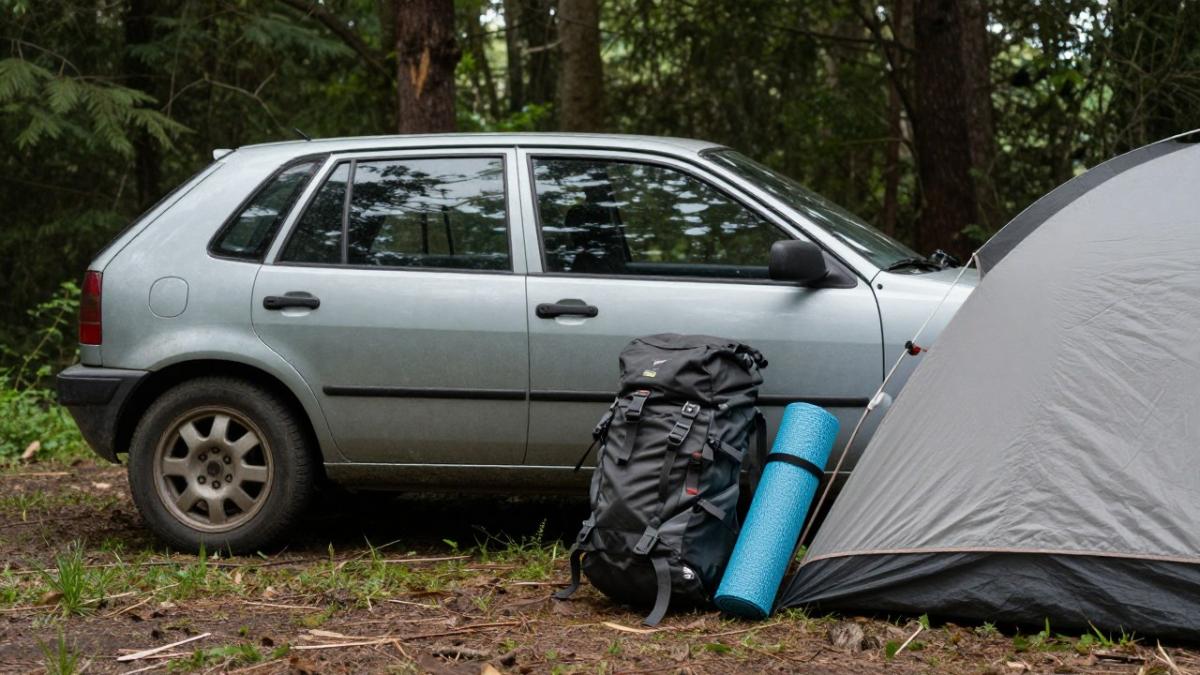
Shelter and sleep gear is often where nomads spend the most money, so match the item to your real trips rather than the trip you imagine.
Backpacking Tent: MSR Hubba Hubba LT 2
The MSR Hubba Hubba LT 2 is a two-person backpacking tent named as a top two-person backpacking pick in a 2026 team-tested camping gear review. It suits nomads who carry their shelter on foot and want a single setup for two people.
Best for: backpackers who need a shared tent that can be carried on the trail. Skip if: you mostly car camp and want a roomier, more comfortable tent.
Vehicle-Based Shelter: Thule Approach Rooftop Tent
The Thule Approach Rooftop Tent appears among the team-tested picks in a 2026 camping gear review. A rooftop tent moves your sleeping setup off the ground and onto the vehicle, which suits nomads who spend long stretches in one vehicle.
Best for: vehicle-based nomads who want a fast, elevated sleep setup. Skip if: your vehicle cannot carry a roof load or you plan frequent trips where you need to keep the vehicle's roof free.
Group and Car Camping: NEMO Aurora Highrise 6P
The NEMO Aurora Highrise 6P is named the favorite camping tent in a 2026 camping gear roundup. Its six-person capacity gives plenty of room for families or a small group traveling together.
Best for: families and groups who car camp and value headroom. Skip if: you hike with your shelter. A six-person tent is heavy and bulky for carry-on-foot trips.
Sleeping Pad: Therm-a-Rest MondoKing 3D
The Therm-a-Rest MondoKing 3D is a camping mattress included in a 2026 favorite camping gear roundup. A dedicated sleeping pad or mattress is often the difference between a restful night and a sleepless one, especially in cold or uneven ground.
Best for: car campers and vehicle-based nomads who want a dedicated camping mattress. Skip if: you need a lightweight pad for long hikes. The supplied results do not give its dimensions or weight, so confirm those before you commit.
Durable Camping Gear for Long-Term Travel: Comparison Table and Pros and Cons
Long-term travel puts more strain on gear than weekend trips do, and the failure points are predictable: zippers, pole joints, seam tape, valve gaskets, and buckle hardware.
| Product | Type | Best For | Key Pro | Key Con | What to Verify Before Buying |
|---|---|---|---|---|---|
| MSR Hubba Hubba LT 2 | Backpacking tent | Two-person hikers | Named a top two-person backpacking tent in team testing | Price and weight not shown in results | Packed weight, floor dimensions, pole repair kit availability, seam-tape warranty |
| Thule Approach Rooftop Tent | Rooftop tent | Vehicle-based nomads | Elevated, quick sleep setup | Needs a compatible roof and vehicle | Dynamic roof load rating, ladder and mounting hardware, replacement fabric availability |
| NEMO Aurora Highrise 6P | Six-person tent | Groups and families | Ample room for a group | Bulky for carrying on foot | Packed size, minimum trail weight, number of poles, footprint sold separately |
| Therm-a-Rest MondoKing 3D | Camping mattress | Car campers | Dedicated sleep surface | Dimensions and weight not shown | R-value, inflated and packed dimensions, valve type, patch kit included |
Decision criteria that matter more than the spec sheet:
- Repairability. A tent with a published pole-repair kit and a mattress with a field patch kit will outlast one with no visible repair path, even if the second item has better headline specs. Ask whether the manufacturer sells replacement poles, zipper sliders, valve cores, and fabric patches.
- Warranty structure. A limited lifetime warranty on seams and poles is more useful to a nomad than a one-year general warranty, because most failures show up in months two through twelve of full-time use.
- Packed volume versus usable volume. A tent that packs to a claimed minimum size but needs a separate footprint and stake bag takes more vehicle space than the listing suggests. Budget storage for the whole system, not just the shelter body.
Pros and cons at a glance:
- MSR Hubba Hubba LT 2: Pro: designed for two people on the trail with a carry-friendly packed size. Con: price and weight are not in the supplied data, so confirm before budgeting.
- Thule Approach Rooftop Tent: Pro: sleeps off the ground and sets up quickly. Con: requires a roof-capable vehicle and a dynamic load rating that matches the tent plus occupants.
- NEMO Aurora Highrise 6P: Pro: generous space and headroom for a group. Con: too large and heavy for lightweight travel; plan on vehicle-based use.
- Therm-a-Rest MondoKing 3D: Pro: dedicated camping mattress for car and vehicle campers. Con: size and weight unverified in the supplied data; confirm packed dimensions against your storage plan.
Watch out: a comparison table built on incomplete specs can push you toward the wrong item. Treat any blank cell as a reason to check the manufacturer's page, not as a neutral detail.
Lightweight Camping Gear Checklist for Nomads
Use this checklist to make sure your kit covers the basics before you hit the road. Adjust it for your climate and trip length.
- Shelter sized for your group, with a footprint that fits your storage space
- Sleeping pad or mattress rated for the coldest nights you expect
- Sleeping bag or bedding suited to your lowest expected temperature
- Spare tent pole or repair kit for field fixes
Budget Hiking Gear List: Spending Smart Without Cutting Reliability
Budget gear does not have to mean unreliable gear, but the math nomads run is different from the math weekend campers run.
Spend where failure ends the trip:
- Shelter. A torn fly or a snapped pole in bad weather is the most common trip-ender. Put the largest share of your core budget here, and favor tents with published pole-repair kits and seam warranties.
- Sleep system. A sleeping pad that loses its valve or a bag that loses loft in the cold is the second most common failure. Look for a field patch kit and a temperature rating with margin below your coldest expected night.
- Water treatment. A failed filter forces you to buy bottled water or boil, which adds daily cost and time. A backup treatment method (tablets or a second filter) is cheap insurance.
Save where failure is annoying but survivable:
- Lighting. A headlamp is easy to replace on the road and rarely ends a trip. A mid-priced model with a spare battery set is usually enough.
- Cookware. A simple pot and stove are hard to break and easy to replace at most outfitters.
- Storage and packing. Stuff sacks and organizers are commodity items; buy functional, not premium.
Total cost of ownership for nomads:
- Replacement cost. Price the replacement parts before you buy the item. A tent whose pole set costs a third of the purchase price is a different value than one with a cheap, stocked repair kit.
- Warranty value. A limited lifetime warranty on seams and poles is worth more to a full-time traveler than a one-year general warranty, because most failures surface in months two through twelve of daily use.
- Resale and hand-me-down value. Gear from established brands holds resale value better, which lowers the effective cost if you upgrade later.
- Daily cost. Divide the purchase price by the number of nights you expect to use the item. A shelter used 200 nights a year is a very different per-night cost than one used 20 nights a year.
A budget-minded sleep option: Many nomads find that a folding camping cot offers an affordable raised sleep surface when a full mattress setup is out of reach.
Set a total budget for your core kit first, then fill in gaps over time.
Watch out: a low sticker price can hide a high replacement cost.
Choosing Your First Setup and Getting Help Before You Buy
Start with the trips you actually take. Weekend car campers and full-time nomads need different gear, and a first setup should match your next six months, not your dream year. Read specifications carefully, compare packed size and weight, and check warranty and repair options.
If you have questions about whether a product suits your travel style, contact the Camp Cave Forest Supply team before you order.
Frequently Asked Questions
What is the 200 rule for camping?
The 200 rule is a common guideline suggesting you set up camp at least 200 feet (about 60 meters) from water sources, trails and other campsites to limit impact on the environment and protect water quality. It is often paired with Leave No Trace principles, which the U.S. Forest Service and National Park Service both promote. For nomads, applying the rule means choosing a shelter that pitches quickly on durable ground so you can move your camp without leaving marks behind.
What camping gear is essential for nomadic living?
Essentials for nomadic living include a shelter sized to your travel style, a sleep system with a sleeping bag rated for your coldest expected temperature, a sleeping pad with a suitable R-value, a compact stove and cookware, a water filter, layered clothing with weather protection, and a headlamp with spare batteries. Prioritize items you can repair or replace on the road. For current pricing and availability, check the Camp Cave Forest Supply website.
How do you choose durable camping gear for long-term travel?
Look for materials and construction that tolerate repeated packing, setup and weather exposure, such as ripstop nylon or polyester fabrics, reinforced stress points, and replaceable parts like poles, zippers and buckles. Check whether the manufacturer offers repair services or spare parts. Test gear on shorter trips before committing to a long journey, and keep a basic repair kit with patch material, cord and a needle.
What compact camping gear is best for nomads?
Compact options for nomads include two-person backpacking tents, which pack small enough for a single pack, along with lightweight sleeping pads and compact sleeping bags. Vehicle-based nomads may prefer a rooftop tent, which frees up interior space but requires a compatible roof rack and vehicle. Compare packed size and weight against your transport method, since a tent that fits in a car trunk may be too heavy to carry on foot.