 Comparison
What Makes a Reliable Wilderness Survival Kit Worth Buying?
Last Updated: October 25, 2026
Quick Summary
A reliable wilderness survival kit contains tools that actually work in harsh field conditions, addresses all six survival categories (fire, water, shelter, navigation, signaling, first aid), and has a weight-to-value ratio you'll actually carry. The global outdoor survival kit market reached USD 1.8 billion in 2025 and is projected to grow to USD 4.2 billion by 2030 as people increasingly recognize that a reliable wilderness survival kit is essential insurance for emergencies.
- A ferro rod with prepared tinder is the most reliable fire-starting method; matches and lighters fail in wet conditions.
- A portable water filter or purification tablets prevent waterborne illness, which can become life-threatening in the field.
- An emergency space blanket weighs less than an ounce and reflects up to 90% of body heat to prevent hypothermia.
- A compass, signal mirror, and whistle form the navigation and signaling core without requiring batteries or external signals.
- Pocket kits weigh under 1 pound for day hikes, while 72-hour kits weigh 5 to 15 pounds for backcountry trips.
Table of Contents
- What Defines a Reliable Wilderness Survival Kit
- Wilderness Survival Kit Essentials: What You Actually Need
- Survival Kit Checklist: Building Your Decision Framework
- 72-Hour Survival Kit vs. Lightweight Pocket Kits
- Prebuilt Survival Kit vs. DIY: Which Approach Wins
- How We Evaluate Survival Kits: Testing Methodology and What Matters
- Weight, Durability, and Long-Term Maintenance
- Climate- and Terrain-Specific Kit Selection
- Frequently Asked Questions
What Defines a Reliable Wilderness Survival Kit
A reliable wilderness survival kit is one that actually works when you need it, not just in theory, but in the field under real stress. Too many preassembled kits prioritize looking comprehensive over being functional.
What separates a kit worth carrying from one that's deadweight? Learn more about essential gear options and how to evaluate survival equipment.
The market has grown because people increasingly understand that a reliable wilderness survival kit isn't optional, it's insurance. But growth doesn't mean quality improved.
At Camp Cave Forest Supply, we've curated a selection of survival gear specifically chosen for real-world reliability. Our focus is on tools that perform when conditions are worst, not marketing claims that sound impressive in a product description.
Wilderness Survival Kit Essentials: What You Actually Need
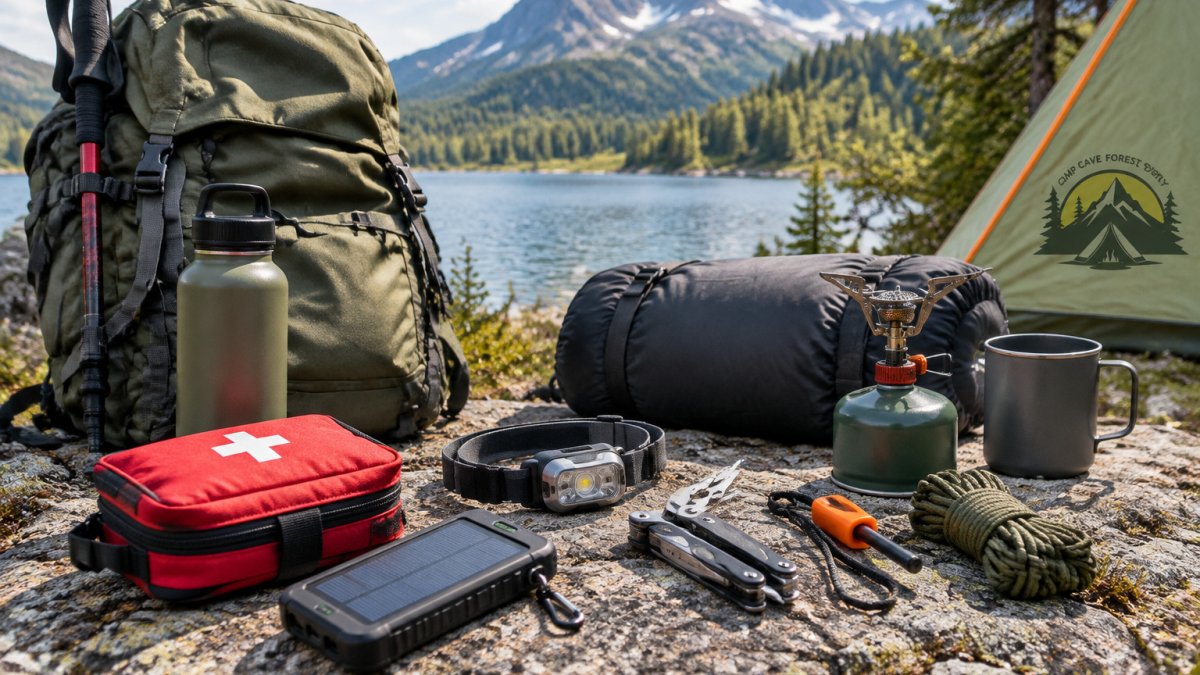
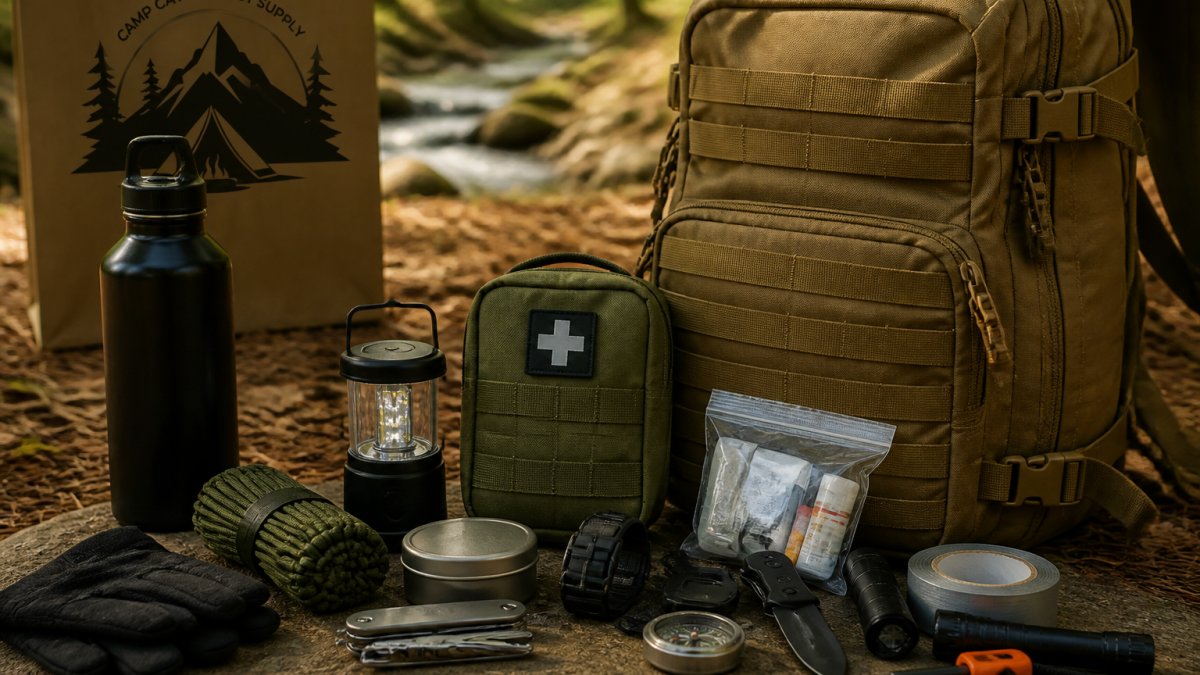
The essentials fall into six categories: fire, water, shelter, navigation, signaling, and first aid. Every reliable wilderness survival kit addresses all six. If it's missing any of these, it's incomplete.
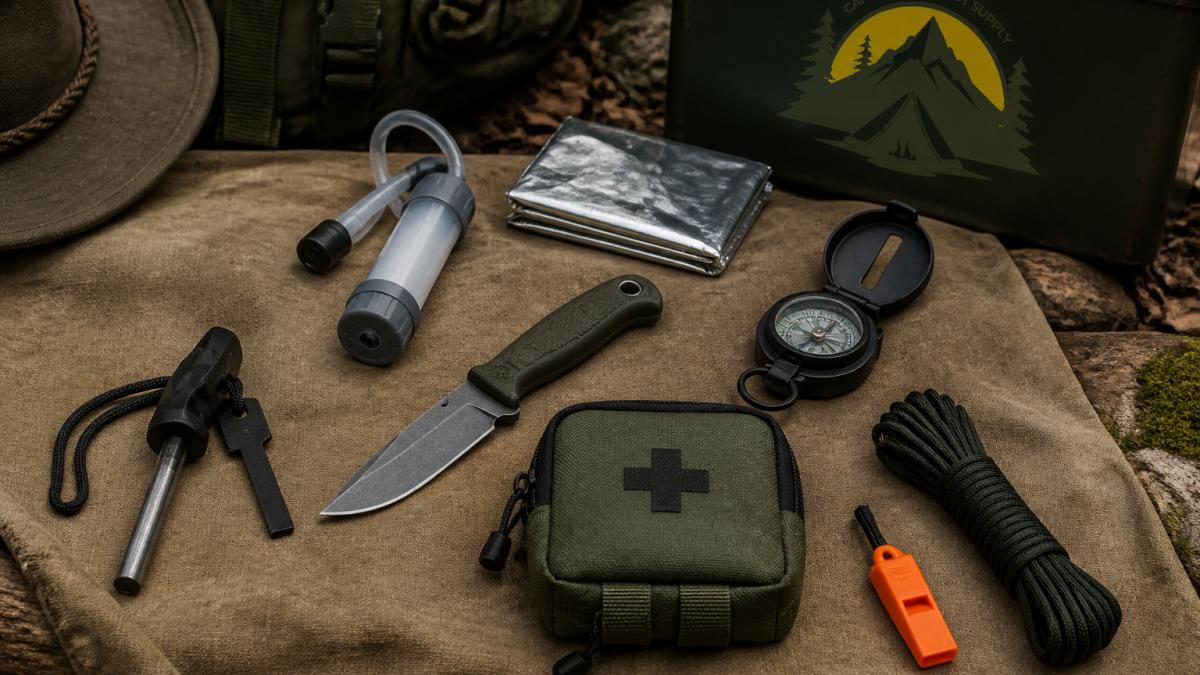
Fire-starting equipment is non-negotiable. A portable water filter or purification tablets prevent waterborne illness, which can turn a minor setback into a life-threatening situation. Shelter and emergency warmth save lives in temperature drops.
The best kits don't just include these categories, they include versions of each that actually work in field conditions.
Fire-Starting Equipment and Tinder
A ferro rod with a striker is the single most reliable fire-starting tool for wilderness survival. It works when wet, when cold, when you're stressed, and it produces sparks for years without degrading. Matches and lighters fail. Ferro rods don't.
Tinder is the second half of the equation. Char cloth ignites from a single spark and burns long enough to catch kindling. Commercial tinder tablets (like Esbit or similar products) are lightweight and reliable. Natural tinder, dry grass, bark, is unreliable in the field when you need it most. A reliable wilderness survival kit includes both a ferro rod and prepared tinder, not just one or the other.
Water Filtration and Purification Tools
Dehydration kills slowly. Waterborne illness kills faster. A portable water filter removes bacteria and parasites, making water from streams and lakes safe to drink (the CDC). Filtration systems that use activated charcoal or hollow-fiber membranes are proven in field conditions.
Purification tablets (like iodine or chlorine dioxide) are a backup. They're lightweight, shelf-stable for years, and work in any container. A reliable kit includes both, filtration as the primary method, tablets as backup when the filter fails or you run out of replaceable cartridges.
Shelter, Warmth, and Emergency Blankets
An emergency space blanket weighs less than an ounce and reflects up to 90% of your body heat. It's not comfortable, but it keeps you alive in temperature drops. A lightweight emergency bivy (a thin sleeping bag shell) offers more protection and still weighs under a pound.
Paracord serves double duty: it secures shelter materials and can be unraveled for other uses. 50 feet is the minimum; 100 feet is better. A reliable wilderness survival kit includes both emergency insulation and cordage.
Navigation, Signaling, and Getting Found
A compass doesn't rely on batteries or signals. It works in any weather and points north reliably. A signal mirror reflects sunlight miles away, visible from aircraft and rescue teams. An emergency whistle carries farther than your voice and requires no power.
Bright fabric or flagging tape helps rescuers spot you. These three items, compass, mirror, whistle, form the navigation and signaling core of a reliable wilderness survival kit.
First-Aid Supplies and Cutting Tools
Injuries happen in the field. A small first-aid kit with bandages, antibiotic ointment, pain relief, and blister treatment handles minor wounds. A fixed-blade knife or quality multitool lets you process wood for shelter, prepare food, and handle tasks that require cutting.
A reliable wilderness survival kit includes both, enough first aid to handle common injuries, and a cutting tool sharp enough to be useful.
Survival Kit Checklist: Building Your Decision Framework
Use this checklist to evaluate any prebuilt kit or to assemble your own:
| Category | Essential Item | What to Look For | Why It Matters |
|---|---|---|---|
| Fire | Ferro rod + tinder | Works when wet; tinder is prepared (char cloth or tablets) | Fire is your first priority for warmth and signaling |
| Water | Filter or purification tablets | Removes bacteria/parasites or chemically treats water | Dehydration and illness are slow killers |
| Shelter | Emergency blanket or bivy | Reflects heat or provides insulation; weighs under 1 pound | Temperature drops kill faster than hunger |
| Navigation | Compass | Doesn't require batteries; points reliably | GPS fails; compasses don't |
| Signaling | Whistle + mirror + bright fabric | Audible for miles; visible from aircraft; lightweight | Rescue depends on being found |
| First Aid | Bandages, ointment, pain relief | Covers common injuries; includes blister treatment | Infection and pain can disable you |
| Cutting | Knife or multitool | Sharp, reliable, fixed-blade preferred | Processing materials and handling tasks |
Before buying or assembling, ask: Does this kit address all six categories? Is each item reliable in wet, cold, stressful conditions? Can I carry it without abandoning it halfway?
72-Hour Survival Kit vs. Lightweight Pocket Kits
A 72-hour survival kit assumes you'll be in the field for three days. It includes more food, more water capacity, and redundancy in critical items. Weight typically ranges from 5 to 15 pounds depending on contents.
A lightweight pocket kit fits in cargo pants or a pack pouch. It weighs under a pound and covers the essentials, fire, water, shelter, navigation, signaling, first aid.
The choice depends on your scenario. Day hikers on established trails benefit from a pocket kit. Backcountry trips, solo hiking, or remote areas justify a 72-hour kit.
A reliable wilderness survival kit in the 72-hour range includes redundancy, two ways to start fire, backup water treatment, extra first-aid supplies. Pocket kits sacrifice redundancy for weight but still cover the essentials.
Prebuilt Survival Kit vs. DIY: Which Approach Wins
Prebuilt kits save time and ensure nothing critical is forgotten. A well-curated kit from a retailer like Camp Cave Forest Supply includes items tested for reliability and packed efficiently.
DIY kits let you customize for your specific scenario, climate, terrain, skill level, trip length. You choose each item based on personal preference and experience. The downside: it's easy to include items you'll never use and miss critical ones.
The Wildland Experience cautions that believing a well-stocked kit guarantees safety can lead to overconfidence. The best kit is the one you'll actually carry and know how to use.
A hybrid approach works too: buy a reliable prebuilt kit and customize it. Remove items you don't need, add items specific to your climate or skill level. This balances convenience with personalization.
How We Evaluate Survival Kits: Testing Methodology and What Matters
Outdoor Life tested five survival kits with a survival instructor and found that most survival kits are not worth carrying in the field. The difference between kits that passed and those that failed: the reliable ones contained items that actually worked, not just items that sounded good.
Our methodology prioritizes field performance over marketing. A kit that looks impressive in photos but fails when you need it teaches an expensive lesson. A kit with fewer items that all work reliably is worth more than a kit packed with gadgets.
Weight, Durability, and Long-Term Maintenance
A reliable wilderness survival kit should weigh between 1 and 3 pounds for pocket kits, 5 to 15 pounds for 72-hour kits. Anything heavier discourages you from carrying it. An ounce saved is an ounce you're more likely to have with you.
Durability matters because kits sit in storage between uses. Ferro rods don't degrade. Paracord doesn't rot if kept dry. Emergency blankets remain effective for years. Water filter cartridges have expiration dates; check them annually. Batteries in flashlights corrode; replace them before storing. First-aid supplies expire; rotate them every few years.
A reliable wilderness survival kit requires minimal maintenance, mostly just checking expiration dates and replacing batteries before storage. The best kits use items with long shelf lives and minimal degradation.
Climate- and Terrain-Specific Kit Selection
A kit for desert hiking differs from one for alpine or tropical environments. Desert kits prioritize shade, water capacity, and sun protection. Alpine kits emphasize insulation, windproof shelter, and navigation in fog. Tropical kits focus on water purification (more parasites), insect protection, and rot-resistant materials.
Terrain matters too. A kit for established trails differs from one for bushwhacking. Rock climbing requires different priorities than paddling.
The best approach: start with a core kit that covers the six essentials, then add or adjust items for your specific climate and terrain. A reliable wilderness survival kit is flexible, it adapts to where you're going, not a one-size-fits-all solution.
Choosing a reliable wilderness survival kit means prioritizing field performance over marketing claims. At Camp Cave Forest Supply, we stock survival kits and individual components tested for real-world reliability. Browse our survival gear collection to find the kit that matches your needs, or explore individual components to build your own.
Frequently Asked Questions
What should a reliable wilderness survival kit include?
A reliable wilderness survival kit must contain fire-starting tools (ferro rod or matches), water filtration or purification tablets, an emergency shelter or survival blanket, a navigation compass, a signaling device (whistle or mirror), a sharp cutting tool or knife, first-aid supplies, and high-calorie emergency food. The exact contents depend on your climate, terrain, and trip duration. A 72-hour survival kit typically includes more substantial supplies than a compact pocket kit designed for day hikes.
Are prebuilt survival kits worth buying, or should I build my own?
Prebuilt kits offer convenience, curated components, and tested configurations that work for most wilderness scenarios. However, they may include redundant items or miss gear specific to your climate or skill level. Building your own kit lets you customize every component and often costs less per item. Many experienced hikers use prebuilt kits as a foundation and add terrain-specific tools. The best choice depends on your budget, expertise, and how much time you want to spend assembling.
How often should I inspect and replace items in a wilderness survival kit?
Inspect your kit at least twice yearly, before and after peak hiking season. Replace batteries annually, check water purification tablets for expiration dates, and refresh first-aid supplies if they show damage or age. Test ferro rods and lighters to confirm they work. Emergency blankets and paracord don't expire but should be checked for tears or degradation. Keep detailed records of replacement dates so you know exactly what's current when you need it most.
What's the difference between a 72-hour survival kit and a lightweight pocket kit?
A 72-hour survival kit contains enough supplies to sustain you for three days, including larger quantities of food, water storage or multiple filtration methods, and comprehensive first-aid gear. A lightweight pocket kit fits in a cargo pocket or small pouch and covers immediate needs (fire, signaling, basic first aid) for a few hours. Pocket kits are ideal for day hikes; 72-hour kits suit backpacking trips, remote areas, or emergency preparedness at home.
Can a survival kit guarantee safety in the wilderness?
No. A well-stocked kit significantly improves your chances of surviving an emergency, but it does not guarantee safety. Overconfidence in a kit can lead to poor decision-making, like hiking unprepared terrain or ignoring weather warnings. Survival kits work best when combined with skills, knowledge, proper planning, and realistic assessment of your environment. They are tools, not substitutes for experience, navigation ability, and sound judgment.