 How-to
How to Pack Fragile Camping Items So Nothing Breaks
Last Updated: November 8, 2026
Quick Summary
To pack fragile camping items, wrap each glass item in two or three layers of packing paper, cushion the container with foam or crumpled paper, fill every empty space, then secure and label the load. When you pack fragile camping gear, keep fuel canisters upright in their own compartment and seal electronics in dry bags.
- Most damage comes from three sources: glass and ceramic gear, fuel canisters, and electronics.
- Packing paper is your workhorse: crumple it into loose balls to fill gaps so gear cannot shift.
- In a backpack, put the heaviest items close to your spine at shoulder-blade height.
- Fragile bins go on the floor or in footwells, never on the roof rack or rear cargo shelf.
- Wet packing paper loses its cushion and turns to mush, so keep it dry.
Table of Contents
- Start With a Fragile Camping Gear Checklist
- The Best Packaging for Fragile Items on a Camping Trip
- How to Pack Fragile Camping Items Without Bubble Wrap
- How to Protect Camping Electronics From Impact and Moisture
- Wrap, Cushion, Fill, and Secure: A Step-by-Step Packing Method
- Backpacking Versus Car Camping: Two Different Packing Plans
- Weatherproofing, Fuel Safety, and Unpacking Checks
- Stock Your Fragile Gear Kit at Camp Cave Forest Supply
- Frequently Asked Questions
Start With a Fragile Camping Gear Checklist
Learning how to pack fragile camping items starts with knowing what breaks. Most damage comes from three sources: glass and ceramic gear, fuel canisters, and electronics. These items are the most commonly damaged in camping gear.
A fragile camping item is any gear that cracks, shatters, leaks, or stops working after a drop, squeeze, or splash, which covers more of your pack than you think.
Glass, Fuel, and Electronics: The Three Risk Categories
Sort your gear before you touch a single sheet of packing paper. Group everything into three piles:
- Glass and ceramic: lantern globes, French press carafes, percolators, enamel mugs with chipped rims, mirror compacts
- Fuel and pressurized items: canisters, lighter fluid, stove fuel bottles
- Electronics: headlamps, power banks, solar panels, GPS units, cameras
Everything else, tents, sleeping bags, cookware, can take a knock. These three piles cannot.
Here is a checklist to run through before any trip:
- Count glass items and note which have removable parts
- Check fuel canisters for dents or rust
- Confirm electronics are charged and ports are clean
- Set aside packing paper, foam sheets, and tape
- Pick one storage bin for glass and one soft-sided tote for electronics
That last step matters: mixing categories in one container is how a lantern globe ends up under a fuel canister.
The Best Packaging for Fragile Items on a Camping Trip
The best packaging for fragile items on a camping trip balances protection with weight and pack space. You are carrying gear on your back or stuffing it into a vehicle, so every layer of padding has to earn its place.
Camping gear takes different abuse than moving boxes: it gets compressed, dropped on rock, rained on, and shoved into tight spaces.
Packing Paper, Foam Sheets, and Air-Cellular Cushioning
Three materials cover almost every fragile camping item:
| Material | Best For | Weight | Reusable |
|---|---|---|---|
| Packing paper | Wrapping glass, filling gaps | Light | Yes, if kept dry |
| Foam sheets | Corners, edges, flat electronics | Light | Yes |
| Air-cellular cushioning | Delicate items needing a full cushion | Very light | Sometimes |
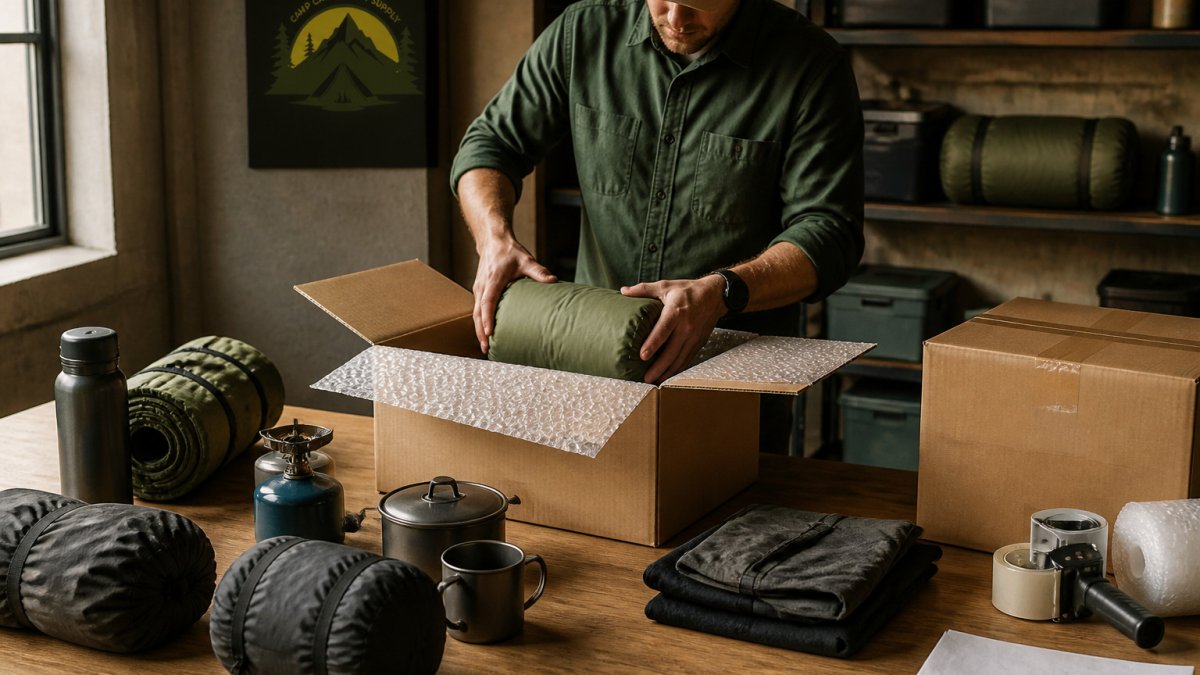
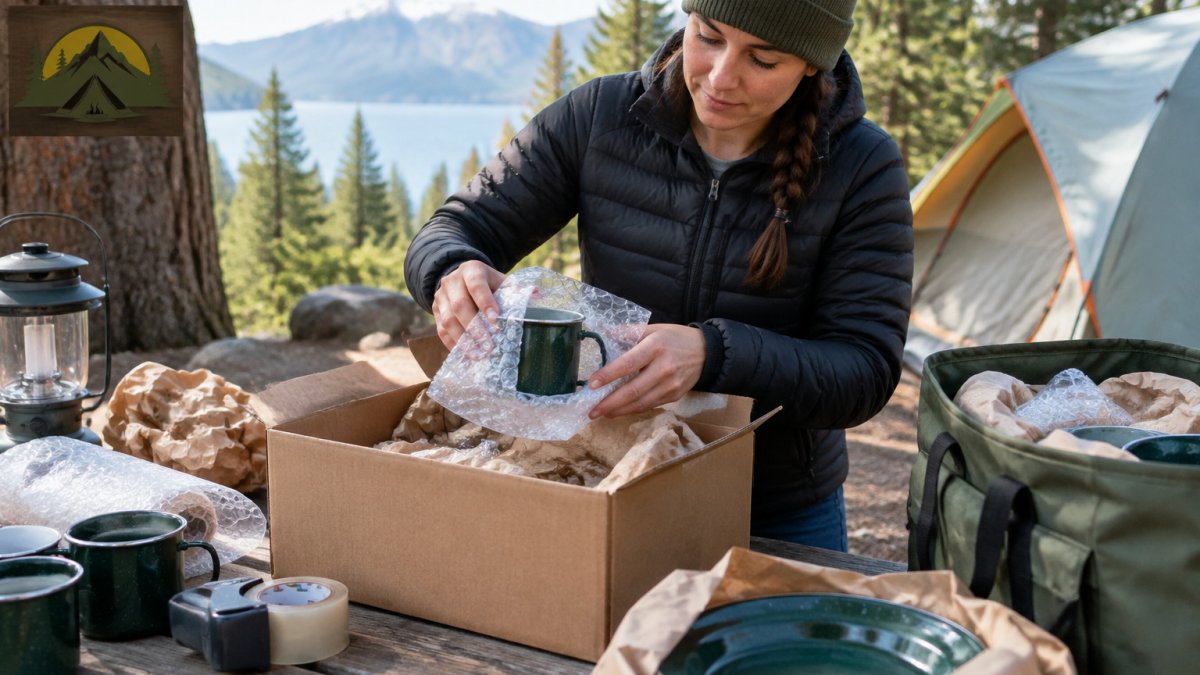
Packing paper is your workhorse. Crumple it into loose balls to fill gaps so gear cannot shift, and wrap glass in two or three layers, taping the ends.
Foam sheets protect corners and edges, where most breakage starts. Cut a sheet to fit the flat face of a solar panel or power bank and tape it in place.
Air-cellular cushioning, with trapped air pockets, cushions delicate items well. It is light and protective but can pop, so keep a repair patch handy.
How to Pack Fragile Camping Items Without Bubble Wrap
You can pack fragile camping items without bubble wrap using crumpled packing paper, foam sheets, clothing, and dry bags. Bubble wrap is bulky, single-use, and a pain to carry out of the backcountry.
Here is how to protect gear without it:
- Crumpled packing paper: Wad it loosely around glass; its air pockets cushion as well as bubble wrap for most items.
- Foam sheets: Wrap corners and flat surfaces, lighter than bubble wrap and lasts for years.
- Clothing: Socks, fleece, and extra shirts make excellent padding; roll a lantern globe inside a wool sock.
- Dry bags: A padded dry bag protects electronics from impact and moisture in one step.
- Blankets: For car camping, a folded blanket around a storage bin adds protection at almost no cost.
The key is multiple layers: one layer of paper will not save a glass carafe, but two or three will. Wrap, tape, and check for movement before it goes into the container.
How to Protect Camping Electronics From Impact and Moisture
Protecting camping electronics comes down to two threats: impact and water. Address both or you are gambling with expensive equipment.
Electronics are the most sensitive items in your pack. A cracked screen or wet charging port can end a trip's power supply on day one.
Headlamps, Power Banks, and Solar Chargers
Each electronic item has its own weak point. Pack to that weakness:
- Headlamps: Remove batteries or lock the switch so it cannot turn on, and wrap the lens in a foam sheet.
- Power banks: Pad the flat faces and keep ports dry. A rugged, water-resistant power bank takes less babying, which is why we stock the 10000mAh solar power bank with a built-in flashlight.
- Solar panels: Fold them flat against a rigid surface so they cannot bend. The foldable 100W solar panel packs small and cushions well in a padded sleeve.
- Spare headlamp: A rechargeable headlamp with a motion sensor is a worth backup, and the sensor headlamp switches on with a wave, even through gloves.
For moisture, seal electronics in a zip-top bag or dry bag before they go into the tote, and add a desiccant packet in humid conditions. Water damage is quiet, you often find out at night, in the dark, when the headlamp will not turn on.
Wrap, Cushion, Fill, and Secure: A Step-by-Step Packing Method
This four-step method is how to pack fragile camping items so nothing breaks: wrap each item, cushion the container, fill empty spaces, then secure the load.
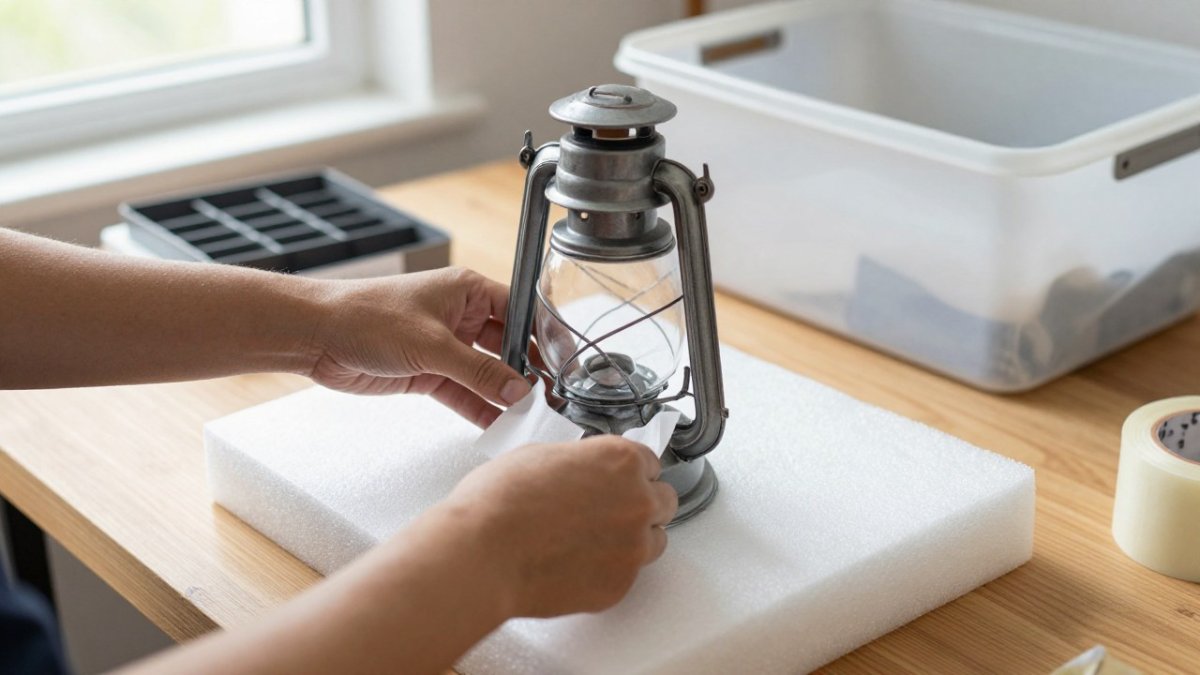
Step 1: Wrap each item individually. Wrap glass in two or three layers of packing paper and tape the ends so the wrap does not unwind; wrap electronics in a foam sheet. For a lantern globe, remove it from the lantern, wrap it separately, and pack the base in a different layer so metal cannot strike glass.
Step 2: Cushion the container. Line the bottom and sides of your bin or soft-sided tote with foam or crumpled paper to absorb the first impact.
Step 3: Fill every empty space. Gear that can move will move, and moving gear breaks.
Load Order and Restraint in a Vehicle or Backpack
The step most campers skip is restraint. Wrapping protects against a drop; restraint protects against the thousands of small vibrations and shifts during travel.
In a backpack, put the heaviest items close to your spine at shoulder-blade height.
Watch out: packing a fuel canister loose in a bin with glass is how a lantern globe cracks before you reach the trailhead.
Backpacking Versus Car Camping: Two Different Packing Plans
Backpackers and car campers need different packing plans for the same fragile gear. A storage bin that works in a trunk will not work in a 50-liter pack, and backpacking protection has to be multi-purpose: every gram of padding is a gram not spent on food, water, or insulation.
Backpacking: Light, Multi-Purpose, and Centered
For backpacking, protection has to be light and multi-purpose:
- Use clothing as padding instead of foam: a wool sock around a lantern globe, a fleece around a power bank, a spare shirt stuffed into gaps.
- Pack glass items in the center of the pack at shoulder-blade height, surrounded by soft gear, where they receive the least direct impact.
- Choose a tactical backpack with compartments that keep fragile gear separate; internal dividers or stuff sacks do the same for less money.
- Leave the French press at home and take a collapsible silicone pour-over or metal camp percolator to remove the glass risk entirely.
- Repackage fuel and liquids into smaller containers; carry only what you will burn.
- Skip rigid bins, a padded stuff sack or dry bag with a rolled fleece inside protects electronics and glass without the empty weight.
A common pattern among backpackers is to treat the sleeping bag compartment as the fragile zone: it is already padded, centered, and isolated from the frame. Wrap glass and electronics, then bury them in the middle of the bag.
Car Camping: Rigid Containers, Load Order, and Restraint
For car camping, you have room to work with:
- Use rigid storage bins with dividers; clear bins let you see inside without unpacking, and dividers keep glass from touching fuel or electronics.
- Pack a folded blanket or cheap fleece throw around bins to absorb vibration between them.
- Keep heavy bins low and light bins high; fragile bins go on the floor or in footwells, not the rear cargo shelf.
- Strap bins down with the vehicle's tie-down points and a cam strap or cargo net so they cannot slide on turns.
- Keep fuel canisters upright in a separate crate away from glass and electronics, and check them for leaks before loading.
The rule of thumb: on your back, every gram of padding competes with food and water. In a vehicle, padding is free, so use more of it, and use restraint to stop movement rather than relying on cushioning alone.
Weather Exposure Changes the Plan Too
Backpacking gear gets rained on and condensation-soaked; car camping gear mostly gets dust and sun. For backpacking, line the pack with a trash bag or use a pack cover, seal electronics in a dry bag, and keep packing paper dry because wet paper loses all its cushion. A windproof camping stove designed for outdoor use pairs safely with properly packed fuel in either setting.
Weatherproofing, Fuel Safety, and Unpacking Checks
Weatherproofing and fuel safety are where a packing mistake can cause real harm: moisture ruins electronics and paper padding, and fuel needs careful handling.
Fuel safety comes next. Store canisters upright and separate from everything else, never next to electronics or glass.
At camp, unpack with care: set glass on flat ground, not a slope; check electronics for moisture before charging; inspect fuel connections before lighting the stove.
Stock Your Fragile Gear Kit at Camp Cave Forest Supply
Packing fragile camping items well takes the right materials and a little planning. Get the checklist, wrapping method, and containers right, and your glass, fuel, and electronics arrive intact.
Camp Cave Forest Supply stocks the gear that makes this easier. Our online shopping experience is fast and user-friendly, and we are focused on customer service.
Visit the Camp Cave Forest Supply website for current prices and product details before you shop.
Frequently Asked Questions
How do you pack extremely fragile camping items so they survive the drive?
Wrap each fragile item individually in packing paper or foam sheets, then add a second protective layer on corners and edges. Place the wrapped item in a storage bin with dividers so nothing touches, and fill every empty space with crumpled paper or a blanket so it cannot shift. Put heavy gear at the bottom and fragile items on top, and label the bin fragile before loading it.
What is the best material to pack fragile camping gear without bubble wrap?
Packing paper, foam sheets, and air-cellular cushioning are the best bubble wrap alternatives for camping gear. Crumpled newspaper works for filling gaps, and a soft blanket or clothing can act as a protective layer around larger items. For backpacking, reusable foam sheets and stuff sacks add cushioning without much weight, and they can be repacked trip after trip instead of thrown away.
How do you keep glass camping gear and lanterns from breaking during transport?
Treat glass as the last item packed and the first item unloaded. Wrap the glass globe or chimney in multiple layers, protect the corners of any glass container, and pack it upright inside a divided storage bin. Never let glass sit against a metal stove, fuel canister, or another hard item. A fragile label on the bin and a dedicated spot in the vehicle, not under heavy gear, prevents most breakage.
How do you protect camping electronics and headlamps when packing?
Remove batteries from headlamps and lanterns, then pack each device in its own pouch or padded compartment so it does not collide with other gear. Power banks and solar chargers go in a dry bag with a desiccant packet to control moisture. Keep electronics in your backpack's top compartment or a hard case, and avoid packing them next to fuel canisters or anything that could puncture or crush them.