 How-to
How to Pack Camping Gear for Shipping Safely
Last Updated: November 1, 2026
Quick Summary
To pack camping gear for shipping safely, first sort everything into pack, ship, pick up, and leave-behind piles. Then clean and dry each item, remove fuel from stoves, wrap and pad gear, and place heavy items at the bottom of the box.
- Sort gear into four piles before packing: pack, ship, pick up at destination, and leave behind.
- Compare total landed cost, including fees, surcharges, insurance, and shipping time, before choosing to ship.
- Empty and air out fuel canisters, and never ship liquid fuel.
- Pack a sleeping bag loosely in a breathable bag rather than vacuum-sealing it.
- Leave at least two inches of padding on every side of a tent inside the box.
Table of Contents
- Sort Your Gear Into Pack, Ship, Pick-Up and Leave-Behind Piles
- Decide Whether to Ship or Carry Your Gear on a Plane
- How to Pack a Tent for Shipping
- How to Ship a Sleeping Bag Without Crushing the Loft
- How to Pack a Camping Stove and Cook Gear Safely
- Camping Gear Shipping Checklist Before You Seal the Box
- Ship Your Camping Gear With Confidence on Your Next Order
- Frequently Asked Questions
Sort Your Gear Into Pack, Ship, Pick-Up and Leave-Behind Piles
Shipping camping gear is easy to get wrong when you pack everything at once. The first step is sorting. Before you touch a box, split your gear into four piles: pack, ship, pick up at the destination, and leave behind.
Here is how each pile works:
- Pack: Items you need with you during travel, like your phone, medications, and a small first aid kit.
- Ship: Bulky or heavy items that are cheaper and easier to send than to carry, like tents and cook kits.
- Pick up: Items you can buy or rent near your campsite, such as firewood or ice.
- Leave behind: Anything you do not need for the trip.
Sorting first keeps your shipment small and your costs down. It also makes it clear what you need to protect the most. Write your four lists on paper so you can check them off as you pack.
Decide Whether to Ship or Carry Your Gear on a Plane
Shipping is not automatically the cheaper or easier choice. Airlines and parcel carriers each enforce their own size, weight, and contents rules, and the right call depends on how bulky your gear is, how far it is going, and how tight your arrival window is.
Run the cost comparison first
Add up both options before you commit:
- Checked-bag fees: Airlines typically charge checked-bag fees, with overweight and oversize surcharges above standard limits. A tent, pad, and cook kit can easily push a single bag into oversize territory.
- Carrier charges: Parcel rates scale with dimensional weight, not just scale weight. A long, light tent-pole tube can be billed as if it were much heavier because of its size. Measure length + girth and compare that to the carrier's oversize threshold.
- Add-ons: Declared value or insurance, signature confirmation, and expedited service all raise the parcel total. Factor them in so you are comparing apples to apples.
- Time cost: Ground service is the cheapest but the slowest. If your gear must arrive before you do, you may need express service, which can erase the savings.
A common pattern is that shipping wins for heavy, bulky, or awkward items (tents, cots, cook kits, trekking poles) on longer trips, while carrying wins for compact, high-value, or time-sensitive gear.
Know the airline side of the equation
If you fly with gear, check the airline's current checked-bag dimensions and weight limits before you pack. Confirm current checked-bag dimension, weight, and fee rules directly with your airline, since limits and fees change.
Know the carrier side of the equation
Verify current prohibited-items lists and packaging standards with the carrier before you seal a box, and keep a record of what you confirmed.
Check the destination before you ship
Call ahead or check the destination's published policy before shipping, since some destinations hold packages for guests and others do not accept them.
How to Pack a Tent for Shipping
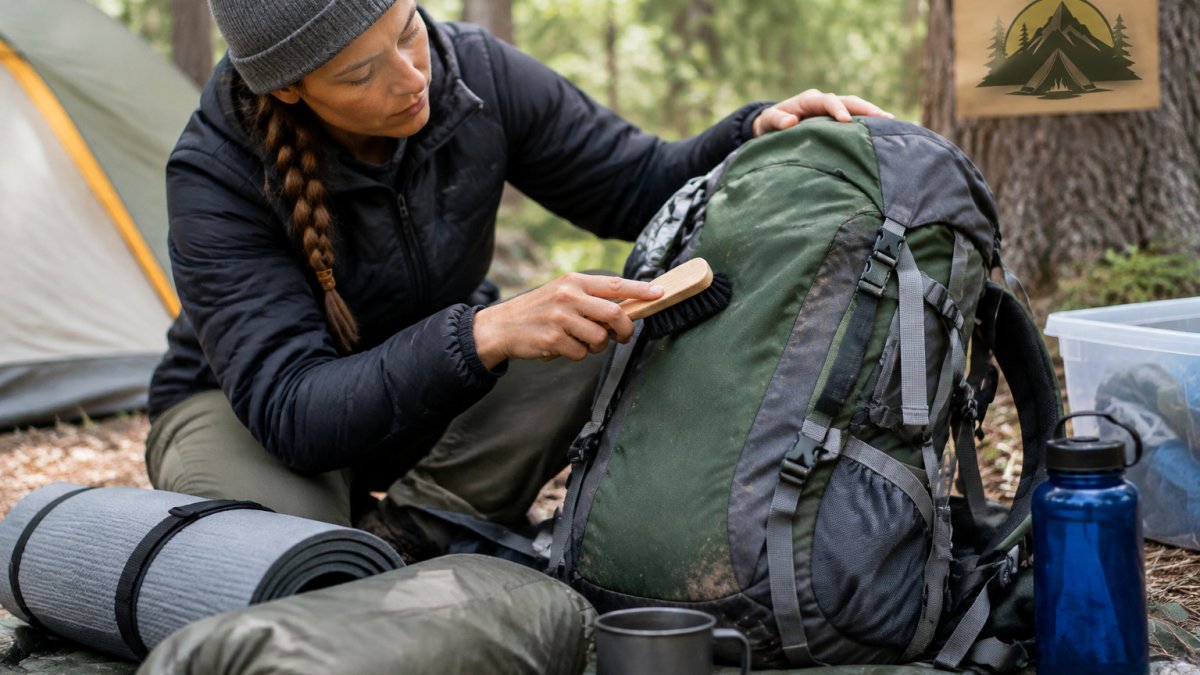
A tent is one of the most common items people ship. Start by making sure it is clean and fully dry, since moisture can cause mildew during transit. Then fold it neatly and place it into a compression stuff sack. This keeps the tent compact and protects the fabric from snags.
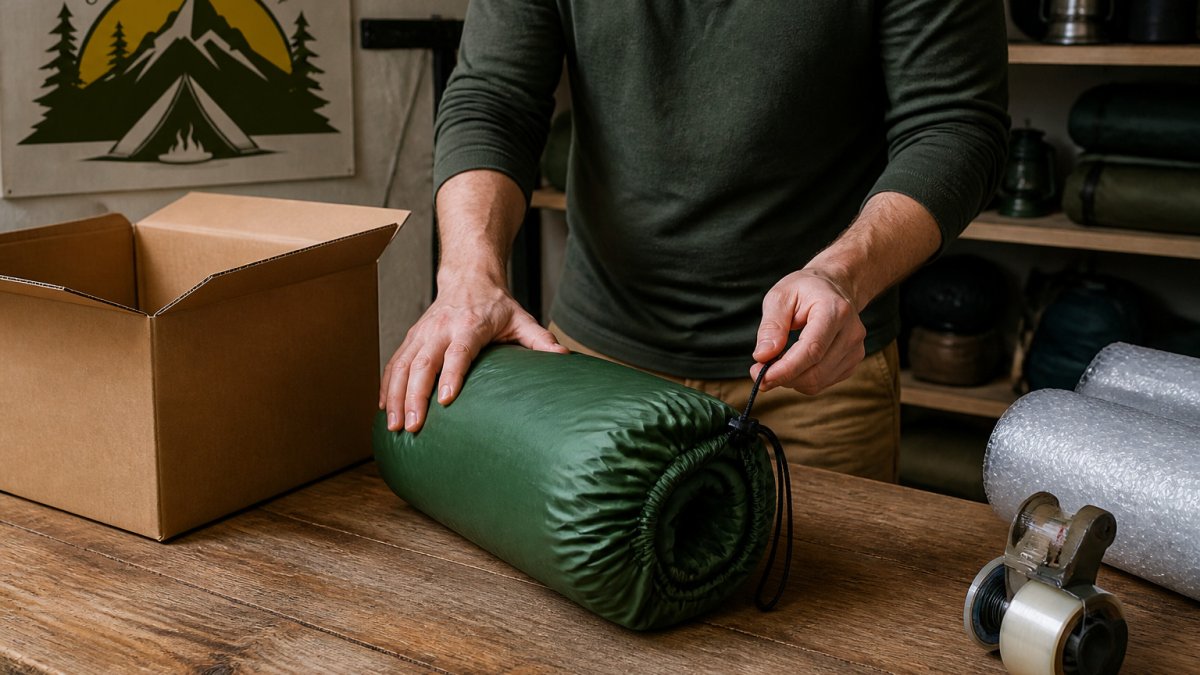
Next, pack the tent poles separately wrapped in bubble wrap or a sturdy tube. Place the tent in the center of a box with at least two inches of padding on every side. For tips on keeping a sleeping bag dry alongside it, see how to keep a sleeping bag dry in a tent. Fill any gaps with clothing or soft items so nothing shifts during transit.
Tip: Label the box clearly with the tent's contents and your return address, so anyone handling the package knows it is camping gear.
How to Ship a Sleeping Bag Without Crushing the Loft
The loft is the puffy insulation that keeps you warm. Compressing a sleeping bag too tightly for a long time can damage that loft. For shipping, use a large, breathable bag rather than the small compression sack you use on the trail.
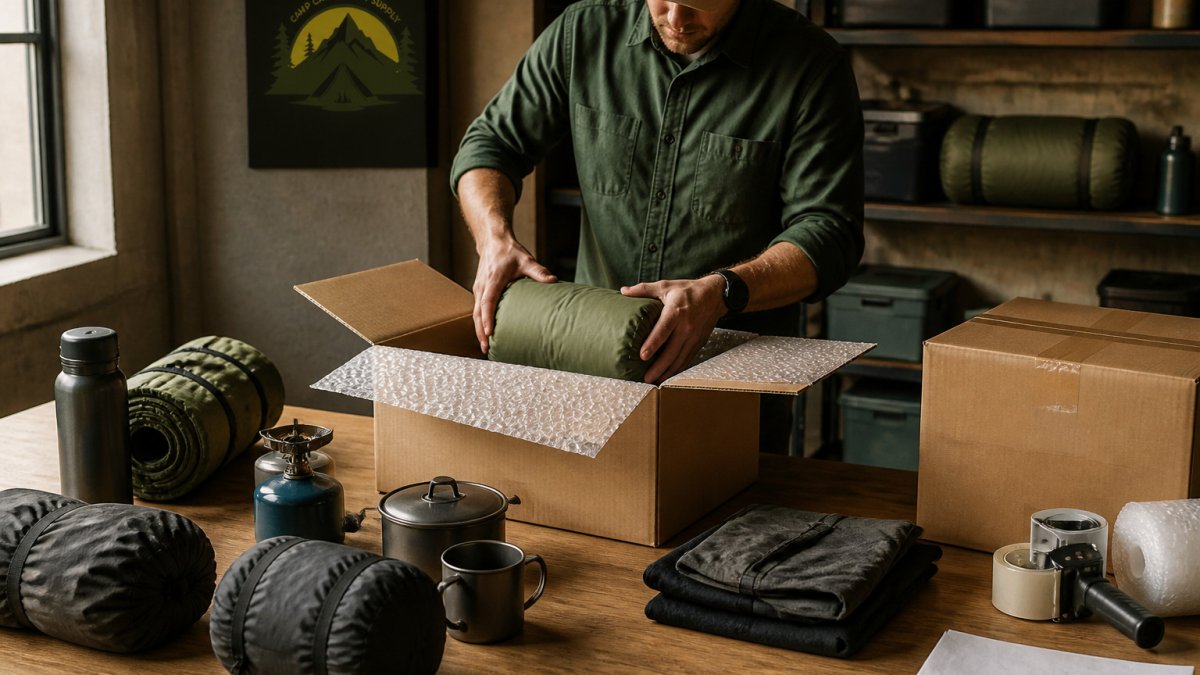
Roll the bag loosely, starting at the foot, and place it in a large polyester or cotton bag. Avoid vacuum-sealing it, since that can flatten the insulation. Set it in the box with soft padding on all sides so the bag cannot be squeezed by heavy items.
When you unpack at your destination, fluff the bag and let it air out for a few hours before use.
How to Pack a Camping Stove and Cook Gear Safely
Stoves and cook gear are the highest-risk items in a camping shipment. Fuel residue, sharp edges, and heavy metal all create problems that a box of clothing does not.
Deal with fuel before anything else
Fuel is a common reason a camping shipment gets refused, delayed, or damaged.
- Empty and air out canisters: A canister that feels empty still holds residual vapor. Leave the valve open in a well-ventilated area until no odor remains, then cap it.
- Never ship liquid fuel: White gas, kerosene, and alcohol fuels are regulated hazardous materials, and shipping them without proper declaration can be a violation. Plan to buy fuel at your destination instead. If you would rather skip liquid fuel altogether, you can compare a compact wood-burning rocket stove.
- Check the carrier's prohibited-items list: Rules differ by carrier and by service level. Confirm current restrictions before you pack, and do not rely on a rule you remember from a past shipment.
- Remove batteries: Take batteries out of electronic igniters and pack them separately per the carrier's battery rules.
Clean and dry the stove
Wipe down the burner, grate, and fuel line with a degreaser or dish soap and water, then let everything dry completely. Food residue and soot attract moisture, cause corrosion, and can stain nearby gear. A clean stove also clears customs and carrier inspection more easily.
Pack cook gear by weight and edge
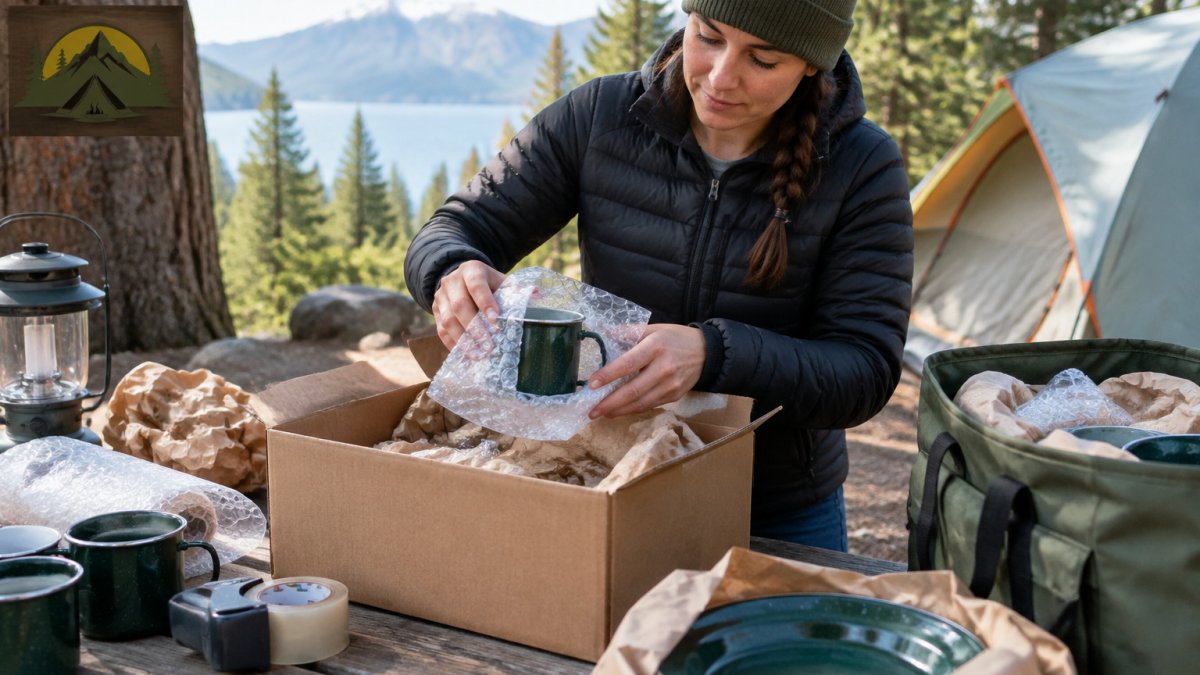
- Pots and pans: Nest them if they fit, but wrap each piece individually in cloth or bubble wrap so they do not rub, dent, or chip nonstick coatings.
- Sharp tools: Knives, spatulas, and can openers go into a protective sleeve or a hard-sided container. Tape the blade guard shut.
- Heavy items at the bottom: Cast-iron skillets, Dutch ovens, and large pots belong at the bottom of the box, directly over the strongest panel, with lighter gear above.
- Lids and handles: Tape or bundle loose lids and detachable handles so they do not shift and puncture the box from the inside.
Separate food and smellables
Keep cooking gear away from food, spices, and anything scented. Food residue and odors can attract pests, stain fabric, and cause a package to be opened for inspection. If you must ship consumables, bag them separately in sealed, odor-barrier packaging and keep them away from the stove and cookware.
Add a moisture barrier
Line the box with a plastic bag or use a waterproof inner bag around the cook kit. Condensation and damp gear are common in transit, and a metal stove that sits in moisture for days will rust. Include a small desiccant packet if you have one.
Camping Gear Shipping Checklist Before You Seal the Box
Use this checklist before you tape the box shut:
- Tent is clean, dry, and folded in a compression sack
- Tent poles are wrapped and padded separately
- Sleeping bag is loosely rolled in a breathable bag
- Stove fuel is removed and the stove is wiped clean
- Cook gear is wrapped individually
- Sharp items are sleeved
- Heavy items are at the bottom of the box
- Empty spaces are filled with soft padding
- Box is labeled with contents and return address
- Carrier rules have been checked for all items
Before you seal the box, run through this checklist to confirm each item is packed and the carrier rules are met.
| Item | Packing step | Key check |
|---|---|---|
| Tent | Clean, dry, folded in compression sack | Free of moisture |
| Tent poles | Wrapped and padded separately | Padded on all sides |
| Sleeping bag | Loosely rolled in breathable bag | Not vacuum-sealed |
| Stove | Fuel removed, wiped clean | No fuel smell |
| Cook gear | Wrapped individually | Sharp items sleeved |
| Heavy items | Placed at bottom of box | Lighter gear above |
| Box | Labeled with contents and return address | Carrier rules checked |
Ship Your Camping Gear With Confidence on Your Next Order
Packing camping gear for shipping takes a little planning, but the steps are simple: sort your gear, decide what to ship, pack each item with care, and check everything before you seal the box. Following this process protects your equipment and helps it arrive ready for your next adventure.
At Camp Cave Forest Supply, we want every trip to start with gear that works the way it should. Visit our website to browse our camping, hiking, and survival gear and find the right equipment for your next outdoor trip.
Frequently Asked Questions
What is the best way to ship camping equipment?
Sort gear first, then pack each item in its own protective layer and place heavy items at the bottom of a rigid box or tote. Use a sturdy outer container, fill empty space with soft goods so nothing shifts, and seal the box with reinforced tape. Keep fuel canisters and anything with liquid out of the box unless the carrier explicitly accepts them, and confirm restrictions before you ship.
Can you ship a tent and sleeping bag in a box?
Yes. Compress the sleeping bag in its stuff sack or a breathable storage sack to protect the loft, and wrap the folded tent in its poles and stakes inside its carry bag. Place both in a box with at least a few inches of padding on every side. Avoid packing damp items, since moisture trapped in a sealed box can lead to mildew during transit.
Should camping gear be cleaned before shipping?
Clean and fully dry everything before packing. Shake out dirt, wipe down tents and cookware, and let sleeping bags and tents air dry completely. Remove food and food residue from cooking gear to prevent odors and pests, and store any clean items in sealed bags to keep them from picking up contamination in the box.
Is it cheaper to ship camping gear or take it on a plane?
It depends on the weight, size and carrier rates on your route, so compare current quotes from your shipping provider with the airline's checked-baggage fees before deciding. Airlines often charge per bag, while ground shipping is usually priced by weight and dimensions. Factor in insurance, tracking and the time you need the gear to arrive.