 Listicle
7 Affordable Hiking Gear Essentials for Weekend Hikers
Last Updated: October 26, 2026
Quick Summary
Affordable hiking gear for weekend hikers means covering the essentials of a day or overnight trip without premium pricing, since most weekend trails never demand expedition-grade equipment. A careful budget kit often outperforms a rushed premium one because the money goes to footwear and rain protection, the items that touch the trail. Starter day kits realistically cost $150 to $275, and full day kits run $225 to $400.
- A weekend hiking packing list fits into a 20 to 30 liter daypack for most trips.
- A budget 25L pack can cost under $30, and affordable hiking backpacks typically run $30 to $75.
- Skip waterproof membranes for summer day hikes, since they add cost and trap heat.
- Try boots on late in the day and check for a thumb's width of toe room and a locked heel.
- A 30°F synthetic bag is the right starting point for three-season weekend overnights.
Table of Contents
- Why Affordable Hiking Gear Works for Weekend Hikers
- Budget Hiking Boots: Where Your Money Matters Most
- Cheap Hiking Gear for Beginners: The 10 Essentials on a Budget
- Your Weekend Hiking Packing List, Item by Item
- Budget Backpacking Gear List for Overnight Trips
- Layering for Less: Base Layers, Insulation, and Rain Protection
- Total Kit Cost: Budget Tiers, Cost-Per-Use, and Used Gear
- Building Your Weekend Kit at Camp Cave Forest Supply
- Frequently Asked Questions
Why Affordable Hiking Gear Works for Weekend Hikers
Affordable hiking gear for weekend hikers is equipment that covers the essentials of a day or overnight trip without premium pricing, and it works because most weekend trails never demand expedition-grade equipment.
Here is the part most guides get wrong: they treat budget gear as a compromise.
Below, we break down each category, what to spend on, and where to save.
Budget Hiking Boots: Where Your Money Matters Most
Budget hiking boots are the one category where we tell people not to shop purely on price. Your feet carry every mile, and a cheap boot with a soft sole will leave you sore by lunch.
Spend on three things: a supportive sole with real traction, breathable materials that dry fast, and a correct fit. According to OutdoorGearLab's hiking gear testing, tested hiking shoes range widely in price, with lower-cost options available alongside premium waterproof models. A lower-priced shoe can work well for weekend trails if the sole is firm and the lugs are deep.
Where you can save: skip waterproof membranes for summer day hikes. They add cost and trap heat. Save waterproofing for cold, wet conditions.
Fit and Sizing Checks Before You Buy
Try boots on late in the day, when feet swell. Wear the socks you will hike in. Check three things:
- Toe room: a thumb's width between your longest toe and the front.
- Heel lock: your heel should not lift when you walk uphill.
- Width: no pressure on the sides, especially at the ball of the foot.
If a boot pinches in the store, it will blister on the trail. There is no break-in miracle.
Cheap Hiking Gear for Beginners: The 10 Essentials on a Budget
Cheap hiking gear for beginners should start with the ten essentials, the standard safety list every hiker carries. You do not need premium versions of any of them.
The ten essentials are navigation, sun protection, insulation, illumination, first aid, fire, repair tools, nutrition, hydration, and emergency shelter. Budget versions of all ten exist. A basic compass, a headlamp, a small first aid kit, and a packable rain layer cover most of the list for very little.
What to skip as a beginner: GPS watches, satellite messengers, and technical shells. They are useful for remote or solo trips, but they are upgrades, not entry requirements. Buy them after you know your trails.
Your Weekend Hiking Packing List, Item by Item
A weekend hiking packing list fits into a 20 to 30 liter daypack for most trips. The list below covers a full day out, and everything on it has a budget option.
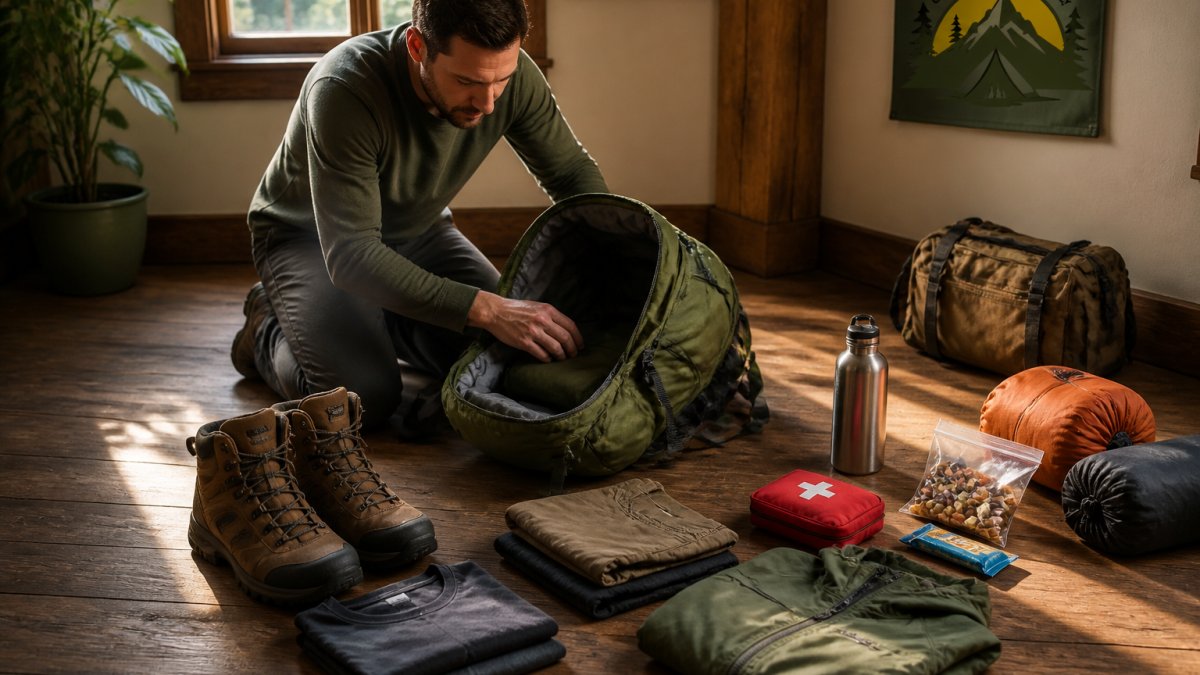
- Daypack: a 25 to 30 liter pack. A budget 25L pack can cost under $30, and a new affordable hiking backpack typically runs $30 to $75 according to Field Mag's daypack guide.
- Footwear: budget hiking boots or trail shoes with firm soles.
- Layers: a base layer top, an insulating layer, and rain protection.
- Hiking poles: a folding pair for balance on descents.
- Hydration: a bottle or bladder, plus a way to treat water on longer days.
- Nutrition: snacks you will actually eat.
- Safety: first aid kit, headlamp, compass, and a packable emergency raincoat.
- Comfort: a sit mat for breaks and a dry bag to keep layers dry.
If you are building this list from scratch, our best budget hiking gear list for 2026 walks through the specific affordable options. When you are ready to buy, a folding trekking pole and a 30L hiking backpack cover two of the biggest line items.
Budget Backpacking Gear List for Overnight Trips
A weekend overnight is not a multi-day thru-hike. You are typically out one night, covering 5 to 12 miles a day, and you can carry a little more weight in exchange for lower cost. That distinction is where most budget backpacking lists go wrong: they mix thru-hiker ultralight advice with beginner overnight needs. The list below is built for one or two nights on established trails.
The Four Additions to Your Day Kit
A budget overnight kit adds four big items to the day kit you already built: a larger pack, a sleep system, a stove, and a shelter. Everything else, layers, rain protection, navigation, first aid, hydration, carries over.
Pack: 50 to 60 liters. Capacity matters more than brand for a weekend overnight.
Sleep system: bag plus pad. Match the bag rating to the lowest temperature you expect, not the average.
Stove: canister or alcohol. A simple canister stove and a small pot cover boiling water for dehydrated meals and coffee.
Shelter: tent, tarp, or hammock. A two-person, three-season tent is the most forgiving choice for beginners.
Weekend Overnight vs. Multi-Day: What Changes
| Item | Weekend Overnight | Multi-Day Trip |
|---|---|---|
| Pack volume | 50-60 L | 60-70 L |
| Food | 1-2 days | 4+ days |
| Sleep system | 30°F bag, basic pad | 20°F bag, higher R-value pad |
| Shelter | Two-person tent | Lighter tent or tarp |
| Resupply | None needed | Planned resupply or cache |
If you are only doing weekend overnights, you can safely skip the ultralight shelter, the high-R-value pad, and the larger food bag. Those are multi-day upgrades.
What to Leave at Home
A weekend overnight does not require a four-season tent, a mountaineering stove, a satellite messenger, or a full repair kit. Carry a small patch kit, a spare buckle, and a bit of duct tape, and leave the rest. The savings go into the sleep system and the pack, which are the two items that most affect whether you sleep well and carry comfortably.
If you are still assembling the day kit these items build on, our best budget hiking gear list for 2026 covers the essentials, and a 30L hiking backpack is the right daypack before you step up to a 55-liter overnight pack.
Layering for Less: Base Layers, Insulation, and Rain Protection
Layering is the cheapest way to stay comfortable, because three affordable layers beat one expensive jacket. The system is simple: a base layer moves sweat away, an insulating layer traps warmth, and a rain layer blocks wind and water.
Start with a synthetic or wool base layer top and bottom. Skip cotton, which stays wet and chills you. Add a fleece or light down jacket for insulation. Finish with a packable rain shell.
For rain protection on a budget, a disposable raincoat keychain is an option for emergency gear, not daily wear, but it belongs in every pack. A lightweight dry bag keeps your base layers and insulation dry if the sky opens up, and a packable emergency raincoat rounds out the rain layer for very little money.
Total Kit Cost: Budget Tiers, Cost-Per-Use, and Used Gear
Most gear guides quote prices item by item and leave you to do the math. That is the wrong way to budget a weekend kit, because the number that matters is the combined cost of a kit you can actually take on the trail.
| Tier | What It Covers | Realistic Combined Cost | Where to Save | Where to Spend |
|---|---|---|---|---|
| Starter day kit | Pack, footwear, layers, safety essentials | $150-$275 | Sit mat, stuff sacks, snacks, water bottles | Footwear, rain shell |
| Full day kit | Adds poles, hydration system, comfort items | $225-$400 | Poles, dry bags, headlamp | Boots, pack fit |
| Overnight kit | Adds sleep system, stove, shelter, larger pack | $450-$850 | Stove, pad, shelter, cookware | Sleeping bag temperature rating, pack |
These ranges assume you are buying new budget gear and starting from zero. If you already own athletic layers, a headlamp, or a daypack, subtract those line items.
Cost-Per-Use Changes the Math
A $200 boot worn 40 times a year costs $5 per trip. A $60 boot replaced twice in the same period costs $120 and delivers worse support on every mile. The same logic applies to packs and rain shells: the mid-priced item that lasts three seasons usually beats the cheapest item replaced annually. When you compare two products, divide the price by the number of trips you expect to get out of it, not by the number of months it sits in your closet.
Repairability and Warranty
Before you buy, check three things: whether the brand sells replacement buckles, straps, or pole segments; whether the warranty covers defects rather than normal wear; and whether local repair is realistic for footwear and packs. A pack with replaceable buckles and a shell with a patch kit can outlast a slightly cheaper alternative that has to be thrown away after one snagged strap.
Buying Used: A Five-Minute Inspection Checklist
Military surplus, gear swaps, and clearance racks offer real durability for less, but inspect before you pay:
- Packs: check shoulder-strap stitching, hip-belt foam, zipper pulls, and the bottom panel for abrasion. Open every compartment and look for mildew smell.
- Footwear: flex the sole and look for separation at the toe cap; check the midsole for compression creases and the lugs for rounded edges. Never buy used footwear that has already been resoled.
- Insulation: hold the bag or jacket up to light and look for clumped or shifted fill; check the shell for pinholes and the zipper for missing teeth. Skip any bag with a compromised shell or a musty odor.
- Safety gear: never buy a used helmet, a used sleeping pad with a slow leak you cannot locate, or used navigation electronics with an unknown battery history.
- Poles: extend every segment and check the locking mechanism; replace missing baskets and worn tips before your first trip.
What Weekend Hikers Can Safely Leave at Home
You do not need a four-season tent, a mountaineering shell, or a satellite messenger for a weekend of established trails. Those are upgrades you buy after you know your conditions, not entry requirements. Put the savings into footwear, a rain shell, and a pack that fits, the three items that determine whether a weekend trip is comfortable.
Building Your Weekend Kit at Camp Cave Forest Supply
Building a weekend kit is a process, not a single purchase. Start with footwear and rain protection, add a pack that fits, then fill in comfort and safety items as your trips get longer.
At Camp Cave Forest Supply, we curate camping, hiking, and survival gear at affordable prices, and our team answers real questions before you buy. That matters when you are choosing your first kit and do not want automated replies.
Frequently Asked Questions
What hiking gear do I need for a weekend trip?
For a two-day weekend trip you need footwear with traction and supportive soles, a 20-30 liter daypack (or 50-60 liters if you are sleeping out), breathable base layers, an insulating layer, rain protection, a sleeping bag rated for the forecast, and the 10 Essentials: navigation, water, food, first aid, and light. Build the kit around conditions rather than buying everything at once, and add hiking poles and a sit mat if your knees or trail comfort need them.
Is affordable hiking gear good enough for weekend trips?
Yes, for most weekend hikers it is. Price alone does not determine quality, and lower-priced hiking shoes can handle well-maintained weekend trails. Spend your budget where failure hurts: footwear, rain protection, and sleep system. Save on packs, poles, and apparel, where mid-range options perform close to premium ones for two-day use.
How can I get quality hiking gear on a budget?
Buy in the off-season, check clearance and sale pricing, and inspect used or military surplus gear before buying. Prioritize safety-critical items new: footwear with intact tread, a rain shell, and a sleep system with a known temperature rating. Repairable gear lowers long-term cost, and cost-per-use math usually favors one solid pair of boots over three cheap pairs.
What is the most important gear for beginner hikers?
Footwear comes first. Budget hiking boots or shoes with supportive soles, real traction, and breathable materials prevent the blisters and slips that end trips early. After that, a correctly fitted pack, rain protection, and layers that you can add or remove as conditions change. Everything else, including hiking poles and a sit mat, is a comfort upgrade you can add later once you know how your body handles the trail.
Ready to get on the trail without overspending? Get started with Camp Cave Forest Supply and build a weekend kit that fits your budget, with gear you can trust and a team that helps you choose.