 blog
Is Durable Hiking Gear for Families Worth It?
Last Updated: November 5, 2026
Quick Summary
Durable hiking gear is worth it for families because buying cheap twice costs more than buying durable once. Gear built to survive years of trail use wins on cost per use, and repairable equipment lets you fix a broken buckle for a few dollars instead of replacing a whole pack.
- Buy the load-bearing three first: footwear, then backpack, then hydration.
- A $90 pair of kids' boots worn 40 times costs $2.25 per hike.
- Check that the maker sells replacement buckles, straps, laces, and soles.
- A child's pack should sit high with the hip belt resting on the hips.
- Clean and dry boots after every hike and re-waterproof shells each season.
Table of Contents
- Why Durable Hiking Gear for Families Pays Off
- The Family Hiking Equipment List: What You Actually Need
- Best Hiking Gear for Kids: Fit, Growth, and Hand-Me-Downs
- Hiking Gear for Beginners: Start With the Load-Bearing Items
- Repairability, Warranties, and Replacement Parts
- Cost Per Use: The Budget Math Families Miss
- Gear Care and Maintenance That Extends Lifespan
- Building Your Family's Gear Kit at Camp Cave Forest Supply
- Frequently Asked Questions
Why Durable Hiking Gear for Families Pays Off
The hiking gear and equipment market hit $6.4 billion in 2025 and is projected to reach $6.8 billion in 2026, according to Grand View Research's hiking gear market report. That spending surge tells you something: families are buying more gear than ever, and much of it fails within a season or two. Durable hiking equipment for families is gear built to survive years of trail use, repeated packing, and the rough handling that comes with kids in tow. Gear that lasts is worth the investment, because gear that ends up in a landfill after three trips costs more over time.
Here is the core argument: buying cheap twice costs more than buying durable once. Below, we'll show you exactly how to build a family kit that survives, plus the cost-per-use math most parents never run.
What Durability Actually Means on the Trail
Durability is not a single feature. It is a combination of materials, construction, and repairability that determines how many seasons a piece of gear will last. Three things matter most:
- Abrasion resistance: Reinforced fabric at high-wear points like pack bottoms and boot toes
- Load capacity: Stitching and hardware rated for real weight, not just the product's own weight
- Repairability: Whether buckles, straps, and soles can be replaced instead of the whole item
A common mistake is judging gear by how it feels in the store. The real test is how it holds up after 40 trail miles with a kid tugging on it.
The Family Hiking Equipment List: What You Actually Need
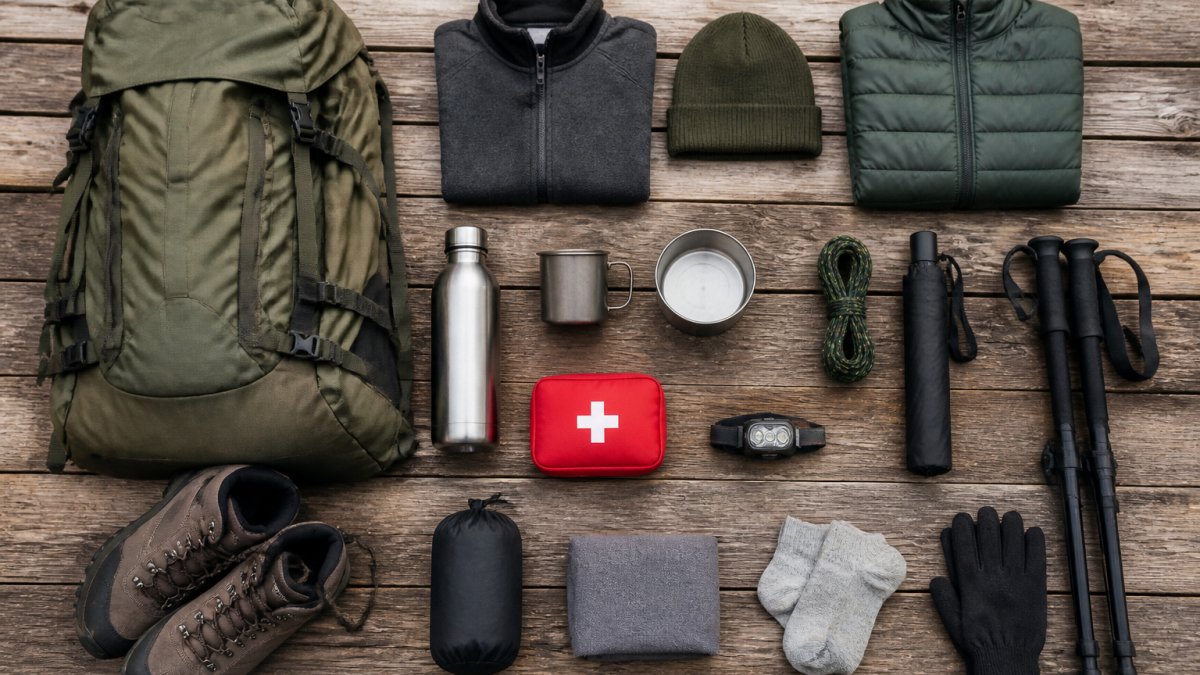
A family hiking equipment list should cover eight categories: footwear, backpacks, hydration, clothing layers, sun protection, snacks, first-aid and safety supplies, and navigation tools. Everything else is optional. Start with these and you cover the needs of every hiker from toddler to adult. What most lists skip is the durability question inside each category, which parts fail first, and what construction detail prevents that failure. That is the lens we use below.
For a broader look at packing for full family trips, our best camping gear for family trips guide breaks down what to bring beyond the day hike. But for the trail itself, the eight categories above are the foundation.
| Category | What to Look For | Durability Check | Why It Matters |
|---|---|---|---|
| Footwear | Ankle support, deep tread, reinforced toe | Rubber rand over the toe, stitched (not glued) sole, lug depth of 4-5 mm | Prevents blisters and rolled ankles |
| Backpacks | Correct torso length, padded straps | Bar-tacked stitching at strap anchors, replaceable buckles, ripstop or coated nylon bottom | Carries weight without strain |
| Hydration | Bottle or reservoir sized to hike length | Bite valve and hose that can be replaced separately; wide-mouth bottle for cleaning | Prevents dehydration |
| Clothing layers | Moisture-wicking base, packable insulation | Flatlock seams, reinforced cuffs, synthetic fill that keeps loft when damp | Handles changing weather |
| Sun protection | Hat, sunglasses, sunscreen | UPF-rated fabric, impact-resistant lenses, broad-spectrum SPF 30+ | Protects skin on exposed trails |
| Snacks | Calorie-dense, easy to pack | Resealable, crush-resistant packaging; no melt-prone items in summer | Sustains energy |
| Safety supplies | First-aid kit, satellite SOS | Waterproof case, refillable components, charged batteries | Handles emergencies |
| Navigation | Map, compass, GPS | Laminated map, liquid-filled compass, spare batteries or power bank | Keeps the group on route |
How Each Category Fails First
Knowing the failure point tells you what to inspect before you buy. A common pattern across family gear:
- Footwear: The toe rand separates from the upper, or the midsole compresses and loses cushioning before the tread wears out. Look for a stitched rand and a midsole that rebounds when you press it.
- Backpacks: Buckles crack and strap anchors pull out under load. Bar-tacked stitching and side-release buckles are replaceable and widely stocked.
- Hydration: Reservoir hoses develop pinholes and bite valves grow mold. A reservoir with a detachable hose and a bottle with a wide mouth last longer because both can be cleaned and repaired.
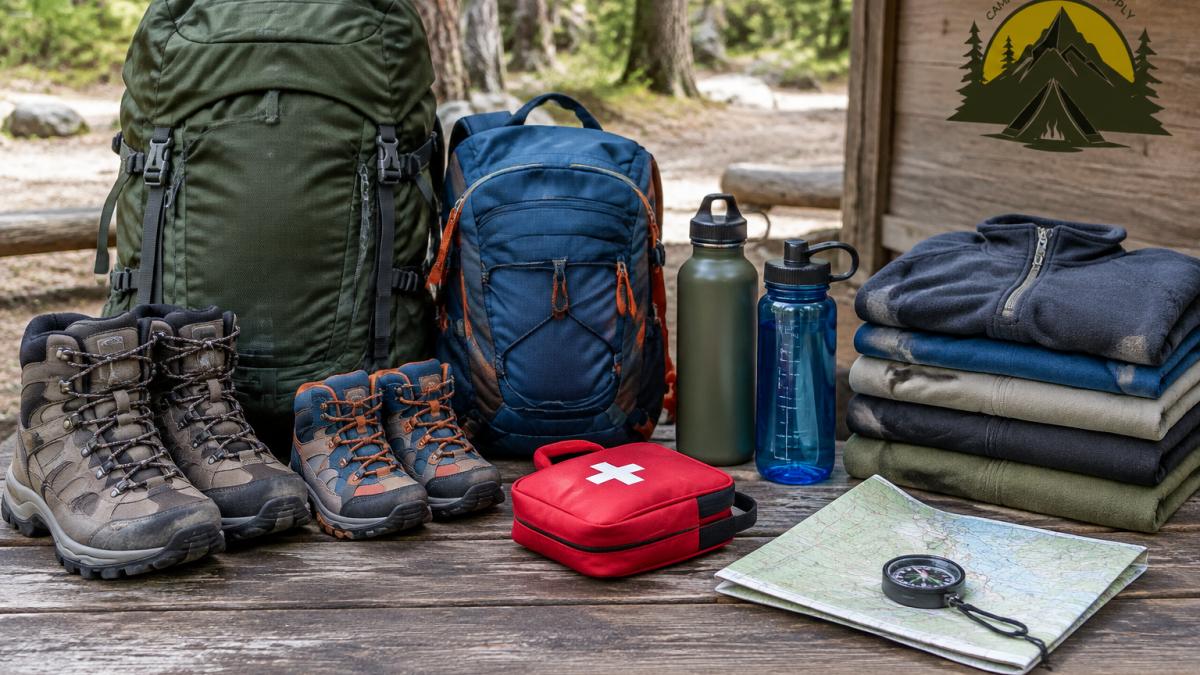
Watch out: a table of categories can tempt you to buy one of everything at once. Buy the load-bearing three, footwear, backpack, hydration, first, then add the rest as trips get longer.
Best Hiking Gear for Kids: Fit, Growth, and Hand-Me-Downs
The best hiking gear for kids is gear that fits now and can be passed down later. Children outgrow boots and packs fast, so buying adjustable, durable equipment stretches every dollar.
Sizing a Child's Pack and Boots Correctly
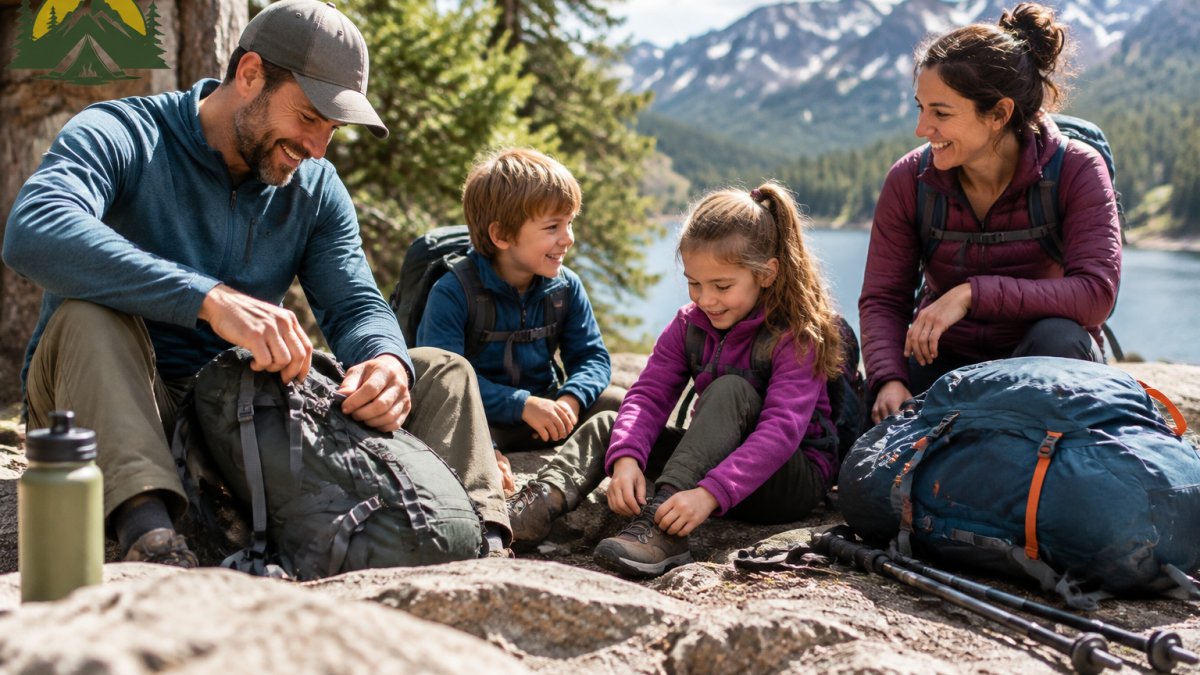
Fit is where most families go wrong. A child's pack should sit high on the back with the hip belt resting on the hips, not the waist. For boots, leave a thumb's width between the longest toe and the boot front. Check fit every few months, because a pack that fit in spring may pinch by fall.
Hiking Gear for Beginners: Start With the Load-Bearing Items
Beginners should buy load-bearing gear first: footwear, then backpack, then hydration. These three items carry the weight and protect the body, so quality here matters most. Everything else can be added gradually as trips get longer.
Our beginner camping gear guide walks through trip-specific choices in more depth. If you want trekking poles to take pressure off knees on descents, our carbon fiber collapsible trekking poles are a lightweight option worth a look.
Repairability, Warranties, and Replacement Parts
Repairability separates durable gear from disposable gear, and it is the angle most family gear guides skip entirely. Before buying, check three things: whether the maker sells replacement buckles, straps, laces, and soles; whether the warranty covers defects versus normal wear; and whether the item can be repaired locally or must be shipped back.
What to Check Before You Buy
- Replacement parts: Look for side-release buckles, strap keepers, cord locks, and laces sold as standalone parts. Standard buckle sizes (typically 20 mm and 25 mm webbing) are widely stocked, so a pack built around them is repairable for years.
- Stitched versus glued construction: Stitched soles and bar-tacked strap anchors can be re-stitched by a cobbler or gear repair shop. Glued or molded-in components usually cannot.
- Warranty language: A defect warranty covers manufacturing faults such as a seam that pulls out on the first trip. It does not cover worn tread or a torn shell from a fall. Read whether the maker offers repair service, replacement at a discount, or a lifetime guarantee, and keep the receipt, most require proof of purchase.
- Serviceability: Confirm the maker publishes repair instructions or partners with a repair network. A pack with a replaceable hip belt and shoulder straps can outlast two children's growth spurts.
A Simple Repair Workflow
Most family gear failures are fixable in under an hour with a small kit: spare buckles, a length of 20 mm webbing, a needle and heavy thread, seam grip adhesive, and a patch kit for shells and pads.
- Identify the failed part. A cracked buckle, a pulled strap anchor, a separated toe rand, or a pinhole in a hydration hose.
- Replace rather than rebuild. Swap the buckle or strap section; do not cut into structural stitching unless you can re-stitch it.
- Seal and patch. Use seam grip on small fabric separations and a patch on shell tears; let it cure fully before use.
- Test at home. Load the pack or wear the boots around the house before trusting the repair on a trail.
What most guides miss is that the cheapest gear often has no replacement parts at all. When a buckle snaps, you buy a whole new pack.
Watch out: a warranty that requires shipping the item back at your cost can exceed the value of a small repair.
Cost Per Use: The Budget Math Families Miss
Cost per use is the price of an item divided by the number of times you use it. A $40 pair of kids' boots worn 5 times costs $8 per hike.
Run this math before every family purchase. Divide price by expected uses, then compare. Durable hiking gear almost always wins over three or four seasons, and hand-me-downs push the cost per use even lower for younger siblings.
Gear Care and Maintenance That Extends Lifespan
Care is the cheapest durability upgrade available. Clean and dry boots after every hike, store packs out of direct sun, and re-waterproof shells each season. Small habits add years to gear life.
Watch out: storing damp gear in a closed bin grows mildew and breaks down fabric fast. For heavy-duty family gear that stands up to repeated use, our oversized heavy-duty camping chairs show what tear-resistant construction looks like in practice.
Building Your Family's Gear Kit at Camp Cave Forest Supply
Building a durable family kit comes down to three moves: buy load-bearing items first, check repairability before you buy, and run the cost-per-use math. Families that follow this spend less over five years and replace far less gear.
Camp Cave Forest Supply offers high-quality camping and hiking equipment with a fast, user-friendly shopping experience and a customer-service-oriented approach. Browse our full camping and hiking equipment category to start building your kit today.
Frequently Asked Questions
What durable hiking gear does a family need for a day hike?
Start with footwear that has real tread and ankle support, a child-sized backpack with a hip belt, and at least one liter of water per person carried in bottles or a hydration pack. Add weather-appropriate layers, a first-aid kit, sun protection, trail snacks, and a map or GPS. Durable hiking gear matters most in the load-bearing items: boots, packs, and water carriers. Those take the most abuse and fail first when built cheaply, so put your budget there before upgrading accessories.
How do you choose hiking gear that will last as kids grow?
Buy adjustable, not oversized. Look for packs with a wide torso range and boots with a little room in the toe box, then size up only when the current fit actually breaks down. Avoid hand-me-down boots, since a previous wearer's footbed molds to their stride and can cause blisters. Packs, layers, and trekking poles hand down well. Check stitching and buckle quality before buying, because those are the first failure points on kids' hiking gear.
What is the 20% rule for backpacking, and does it apply to kids?
The 20% rule says a loaded pack should stay under 20% of the wearer's body weight. Backpacking packs for multi-day trips typically hold 50 to 80 liters and are built for 30 to 50 pound loads, according to OutdoorGearLab's 2026 guidance. For children, keep pack weight well below that ceiling and carry the heavy shared items yourself. A 60 pound child should top out around 12 pounds, which usually means a daypack, water, snacks, and a layer.
How much water should a family bring on a hike?
Plan on roughly half a liter per hour for adults and a bit less for small children, then add extra for heat. A family of four on a three-hour hike needs about six liters total. Carry it in durable bottles or a hydration pack rather than disposable containers, and check that kids can actually reach and open their own water without help. Refillable hard-sided bottles survive drops far better than soft pouches, which is why they last longer with children.
The trail rewards preparation. If you want gear that survives season after season, Camp Cave Forest Supply offers curated, durable equipment, a simple online shopping process, and a team ready to help you choose the right fit. Get started with Camp Cave Forest Supply and build a family kit that lasts.