 How-to
How to Choose Beginner Camping Gear That Fits Your Trip
Last Updated: October 28, 2026
Quick Summary
Start with your trip, not a gear list: decide whether you're car camping or backpacking, and match your shelter, sleep system, and clothing to your climate and season. Beginner camping gear is easiest to pick once you know where you're sleeping, how many people are coming, and what the weather will do.
- Car camping prioritizes comfort, space, and durability, while backpacking prioritizes low weight and small packed size.
- Check typical overnight lows for your destination and plan for colder than forecast.
- For tents, size up one person from the capacity rating so you have room for gear.
- A 3-season tent suits most beginners; 4-season tents are heavier and less ventilated.
- Shop sleeping bags by comfort rating and treat sleeping pad R-value as a key part of warmth.
Table of Contents
- Start With the Trip, Not the Gear List
- Beginner Camping Gear Checklist by Category
- How to Choose a Camping Tent
- Picking the Best Sleeping Bag for Beginner Camping
- Setting a Camping Gear Budget for Beginners
- Buy in Order, Test at Home, and Book Your First Trip
- Frequently Asked Questions
Start With the Trip, Not the Gear List
Most beginners shop backward. They buy a pile of beginner camping gear from a checklist, then find out it doesn't match where they are going. Once you know where you're sleeping, what the weather will do, and who is coming along, the right gear becomes much easier to pick.
Start with three simple questions. Where will you camp? How many people are coming? What kind of weather should you expect? The answers shape nearly every purchase that follows.
Car camping versus backpacking
Car camping and backpacking need very different gear. If you drive to a campsite, you can carry a bigger tent, a full-size cooler, and a folding camp chair. Weight barely matters.
Backpacking flips that around. Every ounce you carry on your back counts, so compact and light gear wins. A heavy tent that feels fine at a drive-up site becomes miserable after three miles on a trail.
- Car camping: Prioritize comfort, space, and durability.
- Backpacking: Prioritize low weight and small packed size.
- Hybrid trips: Choose gear that works for both, like a mid-sized tent.
Matching gear to climate and season
Weather decides how warm your sleeping bag needs to be and how much rain protection you need. A summer trip in a dry climate calls for much lighter gear than a spring trip in a damp mountain area.
Check the typical overnight lows for your destination before you buy. Plan for a temperature colder than the forecast, because nights are often chillier than people expect.
Beginner Camping Gear Checklist by Category
A good beginner setup covers a few core categories. You don't need the most expensive version of each item to start. You do need reliable basics.
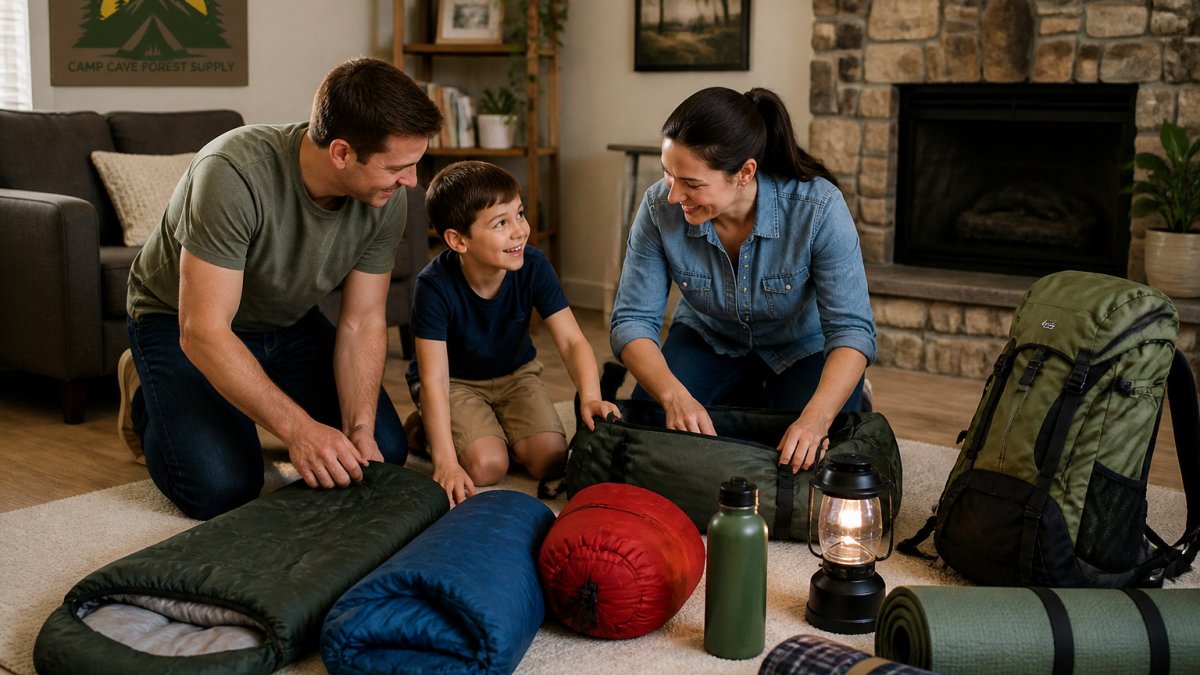
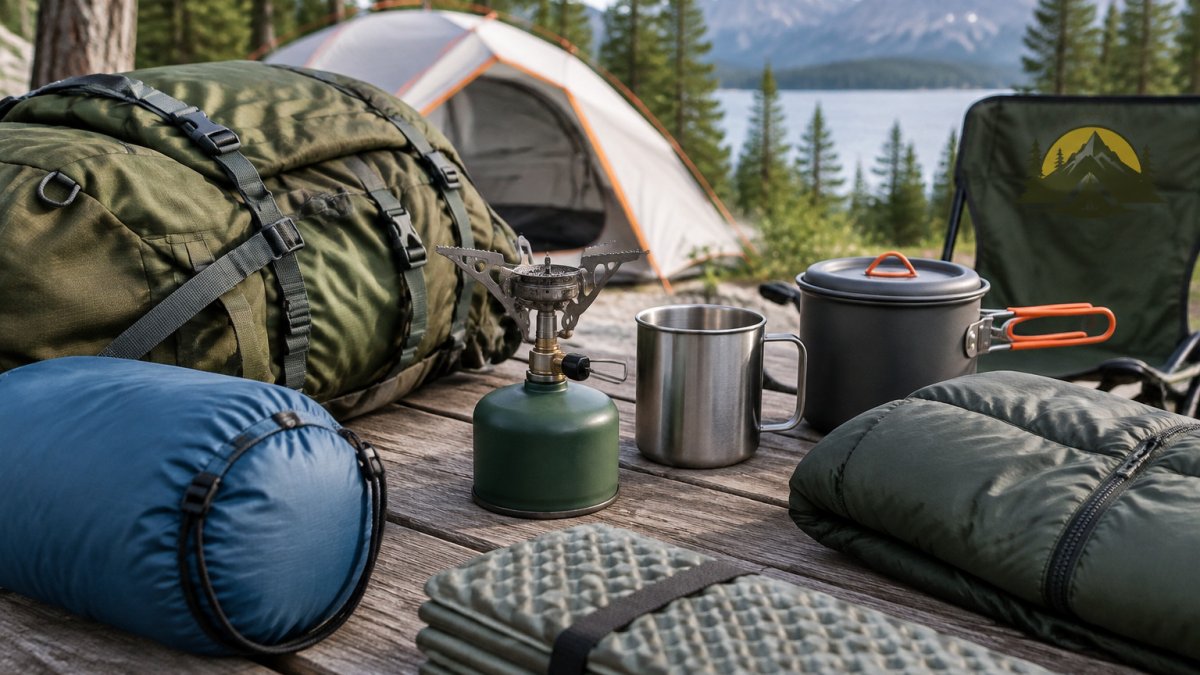
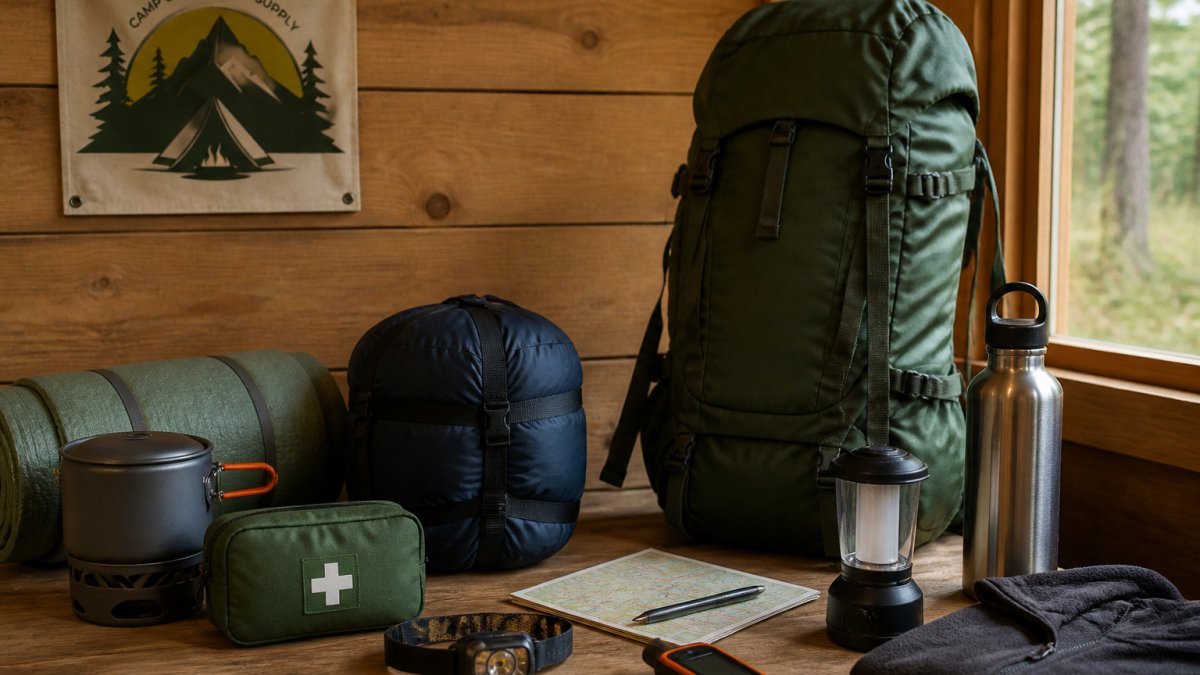
- Shelter: Tent, rainfly, stakes, and a ground tarp
- Sleep system: Sleeping bag, sleeping pad, and a pillow
- Cooking: Stove, fuel, a pot, utensils, and a lighter
- Water and food: Water bottles or a filter, plus snacks and meals
- Light: Headlamp and a backup lantern
- Clothing: Layers, rain jacket, and sturdy shoes
- Safety: First-aid kit, map, and a basic repair kit
Before buying, check each item against your trip type. A lightweight camp tarp with a bug net can cover shelter needs for warm, bug-heavy trips, while a heavier shelter may suit family car camping better.
How to Choose a Camping Tent
A tent is usually the biggest single purchase for a beginner, so it's worth getting right. Instead of shopping by brand or color, compare four specifications: capacity, season rating, packed weight, and floor dimensions. Those four numbers tell you whether a tent will actually fit your trip.
Capacity: read the number, then size up
Tent capacity ratings assume everyone sleeps shoulder-to-shoulder on narrow pads with no gear inside. A "2-person" tent typically fits two 20-inch-wide sleeping pads with little room left for bags or boots. If you want space to sit up, change clothes, or store a duffel inside, size up one person. A solo camper who wants room for a pack usually buys a 2-person tent; a couple usually buys a 3-person tent.
Check the floor dimensions in the spec sheet, not just the capacity number. Multiply the floor width by the length and compare it to your sleeping pad dimensions. Two 25-inch-wide pads need at least 50 inches of floor width before you add gear.
Season rating: 3-season vs. 4-season
A 3-season tent is the default beginner choice. It handles spring, summer, and fall rain and wind, and it vents well enough to sleep in on warm nights. A 4-season tent is built for snow load and high winds, but it is heavier, less ventilated, and usually more expensive. Most beginners do not need a 4-season tent unless they plan to camp in winter or above tree line.
Packed weight and packed size
Packed weight matters most for backpacking. A common pattern is that a 1-person 3-season backpacking tent lands in the 2- to 4-pound range, while a comparable 2-person model runs roughly 3 to 5 pounds. Car campers can ignore weight and prioritize space and durability instead. Always check the packed size against your backpack's capacity, a tent that fits your budget but not your pack is the wrong tent.
Other specs worth checking
- Doors and vestibules: Two doors and two vestibules make a shared tent far more livable; one door means climbing over your partner.
- Peak height: If you want to sit up, look for a peak height near 40 inches or more.
- Footprint: A ground tarp or fitted footprint protects the floor and is cheaper than replacing a tent.
- Stakes and guylines: Count them before your first trip; many tents ship with the minimum.
For backpacking, a 1-person 3-season ultralight tent is a common solo choice. A 2-person 4-season ultralight tent suits couples who expect cold or windy conditions and want to keep weight down.
Compare these four tent specs before buying, since they show whether a tent will actually fit your trip.
| Spec | What to check | Beginner note |
|---|---|---|
| Capacity | Size up one person | Leaves room for gear and sitting up |
| Floor dimensions | Two 25-inch pads need 50 inches width | Check before adding gear |
| Season rating | 3-season for most trips | 4-season is heavier and less ventilated |
| Packed weight | 2-4 lb for 1-person 3-season | Matters most for backpacking |
| Doors and vestibules | Two doors preferred | Easier for sharing a tent |
| Peak height | Near 40 inches | Lets you sit up |
Picking the Best Sleeping Bag for Beginner Camping
Sleeping bags are rated by temperature, and the rating matters more than most beginners realize. The number on the bag is not a guarantee of warmth, it is a starting point you adjust for your own sleep style, clothing, and pad.
Understand the temperature rating
Most bags carry two numbers: a comfort rating (the temperature at which an average sleeper stays comfortable) and a lower limit (the temperature at which a cold sleeper is merely surviving). Beginners should shop by the comfort rating, not the lower limit. Choose a bag whose comfort rating sits a few degrees below the coldest overnight low you expect. If the forecast low is 40°F, a bag with a comfort rating around 35°F gives you a margin for a cold snap.
Check the typical overnight lows for your destination before you buy, and plan for colder than forecast, nights are often chillier than people expect, especially in valleys and near water.
Match insulation to your climate
- Synthetic insulation: Cheaper, keeps some warmth when damp, and easier to clean. A good default for beginners and wet climates.
- Down insulation: Lighter and more compressible for the same warmth, but loses loft when wet and costs more. Better for cold, dry trips and backpacking.
A 3-season sleeping bag works for most beginner trips. It keeps you comfortable in spring, summer, and early fall. Look for a bag that packs down small enough for your car or pack and that is easy to clean.
The pad is half the sleep system
A sleeping pad matters just as much as the bag. Cold ground pulls heat from your body, so a pad with insulation is worth the money. Pads are rated by R-value, which measures resistance to heat loss: an R-value around 2 suits warm summer nights, while an R-value of 4 or higher is a better match for cold ground and shoulder-season trips. Many beginners find that a good pad makes a bigger difference than a pricier bag.
Fit and shape
Mummy bags save weight and warm up faster; rectangular bags feel roomier and are better for car camping. Check the bag's shoulder and hip girth against your body, a bag that is too tight compresses insulation and sleeps cold. Women's-specific bags usually have more insulation in the foot and hip areas and are worth considering regardless of label if the fit is better.
A 3-season sleeping bag completes the sleep system alongside an insulated pad and a pillow.
Setting a Camping Gear Budget for Beginners
Costs vary widely depending on the gear you choose and where you buy it. Check our website for current prices and details.
A practical way to budget is to split your spending into three tiers:
- Must-buy basics: Shelter, sleep system, and light
- Helpful upgrades: Better cookware, a camp chair, and a cooler
- Nice-to-have extras: Specialty tools and multiple outfits
Borrowing and renting can cover expensive items you may use only once. Ask friends or check local outfitters before buying something you may not need again.
Buy in Order, Test at Home, and Book Your First Trip
You don't need to buy everything at once. Buy shelter and sleep gear first, since those affect comfort most. Add cooking and light next, then fill in the smaller items as you go.
Before your first trip, set up your tent in the backyard. Practice inflating your pad and packing your bag. Cook one meal on your stove. Finding problems at home is far better than discovering them in the rain at a campsite.
Watch out: Don't wait until the night before a trip to check your gear. A missing stake or dead headlamp battery is much easier to fix at home.
When you're ready, pick a short first trip close to home. Our family camping gear guide covers ideas for trips with kids, and our lightweight waterproof camp tarp is a good shelter option for warm weather. For a solo trip, our 1-person 3-season ultralight backpacking tent is worth a look. Those who want to compare seasons can check our 2-person 4-season ultralight backpacking tent, and a 3-season sleeping bag completes the sleep system.
Frequently Asked Questions
What camping gear does a beginner need?
A beginner needs a shelter, a sleep system, a way to cook and eat, light, water storage and weather-appropriate clothing. Start with those six categories before adding extras like camp chairs or cookware upgrades. Buying for the trip type you actually plan, whether car camping or backpacking, keeps the list short and avoids paying for gear you will never use on early outings.
How do I choose a camping tent for a beginner?
Choose a tent by counting the people who will sleep in it and adding one spot for gear, then check the season rating that matches your planned trips. Pay attention to setup time and packed weight, since a tent you can pitch in minutes gets used more. Test the setup in your yard before your first trip so you know the poles and stakes work with your hands and tools.
What should I look for in a beginner sleeping bag?
Look for a temperature rating that is at or below the lowest overnight temperature you expect, and remember that comfort ratings run warmer than limit ratings. Choose synthetic fill if you camp in damp conditions, or down if you prioritize low packed weight and dry weather. A bag around 2 to 3 pounds is practical for car camping, while backpackers should prioritize lighter options.
How much should a beginner spend on camping gear?
Check our website for current prices and product details. Spend most of your budget on the shelter and sleep system, which affect comfort and safety the most, and borrow or rent items you only need once. Buying in the order outlined above lets you spread costs over several trips.
Choosing beginner camping gear gets simpler once the trip comes first. Start small, test at home, and build your kit over time. Shop our curated selection at Camp Cave Forest Supply and get the basics you can trust.