 Listicle
7 Backcountry Alternatives for Camping Gear That Save You Money
Last Updated: October 30, 2026
Quick Summary
Backcountry alternatives are retailers, brands, and buying channels outside the dominant outdoor chains that deliver comparable quality at a lower price. Seven options include Camp Cave Forest Supply, Grayman Trading Company, REI, Decathlon, AntiGravityGear, Campmor, and Moosejaw. House brands and direct-to-consumer makers cost less because they skip wholesale margins and retail markups.
- House brands skip the wholesale margin, third-party advertising budget, and sponsored athlete roster baked into name-brand prices.
- Spend up on shelter, sleeping pad, and backpack; save on stuff sacks, utensils, camp towel, and headlamp backup.
- Read one- and two-star reviews first to reveal failure modes like zippers, seam tape, and pole ferrules.
- Never buy a used helmet, climbing rope, or any life-safety item with an unknown history.
- Rent specialized gear for one-time extreme trips, but buy if you camp monthly or more.
Table of Contents
- Why Backcountry Alternatives Are Worth a Look
- Quick Comparison: 7 Backcountry Alternatives for Camping Gear
- Camp Cave Forest Supply: Curated Gear and Real Customer Service
- The Best Places to Buy Camping Gear for Every Budget
- Affordable Backpacking Gear Without the Compromises
- How to Vet Camping Gear Stores Online Before You Buy
- Second-Hand Swaps, Repairs, and Rentals: The Angles Most Shoppers Miss
- Build Your Next Kit with Camp Cave Forest Supply
- Frequently Asked Questions
Why Backcountry Alternatives Are Worth a Look
The camping gear market rewards shoppers who know where to look. A backcountry alternative for camping gear is any retailer, brand, or buying channel outside the dominant outdoor chains that delivers comparable quality at a lower price.
The premium you pay at legacy retailers often covers marketing and real estate, not better materials.
Watch out: the biggest mistake is assuming a low price means low quality. Verify materials and construction before you buy.
Quick Comparison: 7 Backcountry Alternatives for Camping Gear
The table below summarizes the seven alternatives covered in this guide, matched to the shopper each one suits best.
| Alternative | Best For | What It Offers |
|---|---|---|
| Camp Cave Forest Supply | Curated gear plus real support | Fast online shopping, customer service, affordable prices |
| Grayman Trading Company | Preparedness-focused shoppers | Camping and emergency gear |
| REI | Broad selection and co-op membership | Wide outdoor inventory |
| Decathlon | Budget-conscious beginners | Affordable outdoor basics |
| AntiGravityGear | Ultralight backpackers | Lightweight shelters and cook systems |
| Campmor | Value-minded hikers | Backpacking and hiking gear |
| Moosejaw | Deal hunters | Outdoor gear with frequent promotions |
If you want to browse actual camp furniture options and prices side by side, the camp furniture category lays them out. Cook gear shoppers can do the same in the camp cookware category.
Camp Cave Forest Supply: Curated Gear and Real Customer Service
Our approach is a curated selection rather than an endless catalog. Questions about survival prep or a first family trip can be directed to our customer service team.
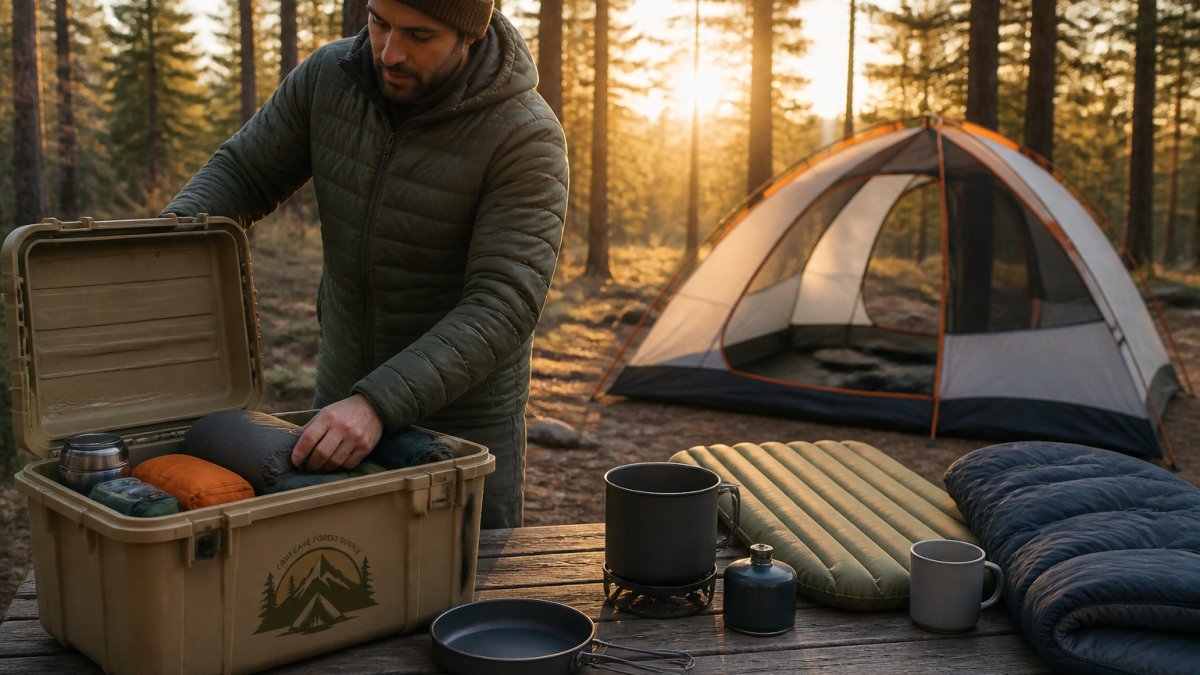
The trade-off is that we carry fewer brands than a larger retailer.
Best for: Shoppers who want guidance, not a wall of options. Skip if: You need a very specific niche item we do not stock.
The Best Places to Buy Camping Gear for Every Budget
Finding the best places to buy camping gear comes down to matching the store to your budget and experience level. Beginners may find affordable basics at Decathlon. Ultralight backpackers look to specialty shops such as AntiGravityGear.
Compare two or three stores on the same item before committing.
Affordable Backpacking Gear Without the Compromises
Affordable backpacking gear does not have to mean fragile gear. Prioritize the items that carry the most weight, literally and financially: your shelter, sleep system, and pack. Spend there.
A few habits keep costs down without cutting corners:
- Buy synthetic insulation over down if you camp in wet conditions; it stays warm when damp.
- Choose a three-season sleeping pad rated for the temperatures you actually camp in.
- Look for moisture-wicking base layers rather than cotton.
For a concrete starting list, our guide to affordable hiking gear essentials for weekend hikers maps out what to buy first. Watch out: cheap trekking poles and headlamps are false economy.
Why Alternatives Cost Less: The House-Brand and DTC Mechanism
Most shoppers assume a lower price means lower quality. Often the opposite is true. Two structural reasons explain why backcountry alternatives undercut legacy retailers on comparable gear.
House brands skip the marketing tax. A retailer's private label, REI Co-op, Decathlon's Quechua and Forclaz lines, Campmor's house offerings, is manufactured to the retailer's spec and sold only through that retailer.
Direct-to-consumer brands skip the retail layer. Cottage and DTC makers sell straight from their own site, so the price reflects materials, labor, and a small margin rather than distributor and dealer markups.
A Price-Tier Framework for Prioritizing Spend
Rather than shopping by brand, shop by tier. A common pattern among experienced backpackers is to allocate budget in three bands:
| Tier | What Belongs Here | Strategy |
|---|---|---|
| High-priority (spend up) | Shelter, sleeping pad, backpack | Buy once; these carry weight and determine comfort and safety |
| Mid-priority (balance) | Sleeping bag or quilt, stove, water filter | Compare house brand against name brand on the same spec sheet |
| Low-priority (save) | Stuff sacks, utensils, camp towel, headlamp backup | House brand or budget tier is fine; failure is inconvenient, not dangerous |
When comparing a house brand against a name brand, put the spec sheets side by side and check four numbers: total weight, packed size, denier or fill power, and warranty length. If the house brand matches on the first three and offers a shorter warranty, the savings are usually worth it for low- and mid-priority items. For a shelter you will sleep in for a decade, the warranty and the resale value of a name brand can justify the premium.
Where the Real Savings Hide
The biggest markdowns are rarely on headline items. They are on last-season colorways, discontinued models, and house-brand equivalents of accessories.
What to avoid: no-name trekking poles and headlamps with no stated warranty. These fail most often in the field, and the savings are small relative to the inconvenience. Buy the budget tier from a retailer that stands behind the product, not the cheapest marketplace listing.
How to Vet Camping Gear Stores Online Before You Buy
Vetting camping gear stores online means checking several things, including the return policy, shipping timelines, and whether you can reach a person with questions.
Run this checklist before checkout:
- Return window is stated plainly and is at least 30 days
- Shipping estimates are specific, not vague
- Reviews mention packaging and condition on arrival
The Federal Trade Commission's online shopping guidance explains your rights on delivery and returns, which helps you spot a store that cuts corners. A store that hides its return policy is telling you something.
Second-Hand Swaps, Repairs, and Rentals: The Angles Most Shoppers Miss
Most gear guides stop at new retail. That is a mistake, because three channels, second-hand marketplaces, repair services, and rental programs, routinely deliver the best value per dollar for backcountry camping gear.
The Second-Hand and Gear-Swap Ecosystem
The resale market for camping gear has matured well beyond forum classifieds. Several established platforms now specialize in or reliably carry used outdoor equipment:
- Gear trade and consignment platforms, dedicated resale sites where sellers list shelters, packs, and sleep systems with photos and condition notes. These attract serious backpackers offloading last-season gear, so quality is higher than on general marketplaces.
- Retailer used-gear programs, trade-in and used-gear sections that bundle the resale discount with a return window. You pay a little more than a private sale and get recourse if the item arrives damaged.
- Community gear swaps, local clubs and trail organizations host seasonal swaps where you can inspect items in person, pitch a tent, and check the floor before money changes hands.
What to check on a used item: zipper function, seam tape condition, pole ferrules for cracks, pad valve integrity, and whether it was stored compressed (bad for synthetic insulation and down). Ask for the purchase year. A five-year-old shelter stored dry and pitched a dozen times beats a two-year-old one stored damp in a garage.
Repair and DIY Maintenance: Longevity Over Consumption
The most sustainable and cheapest gear strategy is the one most shoppers ignore: keep what you have working. A repair usually costs a fraction of a replacement, and the skills are simple to learn.
- Zipper replacement or slider swap, a failed slider can often be replaced without replacing the zipper tape; a full zipper replacement is a shop job but still far cheaper than a new tent or pack.
- Seam re-sealing, factory seam tape degrades over time. Re-sealing with a seam-grip product restores waterproofing for a few dollars.
- Patch kits for shelters and pads, a patch extends life by seasons. Carry a patch kit on every trip.
A practical rule: before replacing any item, price the repair. If it is under a quarter of the replacement cost and the item is otherwise sound, repair it.
Rental vs. Purchase: A Decision Framework
Rental programs make sense when the gear you need is specialized, expensive, and used rarely. The framework is straightforward:
| Situation | Better Choice | Why |
|---|---|---|
| Camping a few weekends a year, fair-weather trips | Rent or borrow | A four-season tent or expedition pack sits unused most of the year |
| One-time trip to extreme conditions (winter, alpine) | Rent | The specialized gear is expensive and rarely reused |
| Camping monthly or more | Buy | Rental fees accumulate past the purchase price quickly |
| Gear you will use across many trips and conditions | Buy | Resale value and warranty favor ownership |
| Trying a new category (e.g., hammock camping) | Rent first, then buy | Test before committing |
Rental sources include outdoor retailers with rental desks, university outdoor programs (often open to the public), and dedicated gear-rental services that ship. Check what the rental includes, a tent rental without a footprint or stakes is a hidden cost. Confirm the damage policy before you sign; some rentals charge full replacement value for tears.
Putting the Three Channels Together
The strongest gear strategy combines all three. Buy core items new or used, repair them as they wear, and rent only the specialized gear you need for a single trip. That keeps total spend low without sacrificing safety or comfort, and keeps functional gear in use instead of in a landfill.
If you are rethinking your whole setup, our guide on how to choose beginner camping gear that fits your trip helps you match purchases to how you actually camp.
Build Your Next Kit with Camp Cave Forest Supply
The right gear strategy is less about chasing the lowest price and more about buying deliberately. Compare stores, verify materials, and use every channel available, including swaps and repairs. Leave No Trace's outdoor ethics guidance is worth reading too, because durable gear you keep for years is the most sustainable choice you can make.
At Camp Cave Forest Supply, we offer a curated selection of camping and hiking gear, with a user-friendly online shopping experience. Ready to assemble a kit that lasts? Start with our backpacks and bags category and build outward from there.
Frequently Asked Questions
What are the best backcountry alternatives for camping gear?
The best backcountry alternatives depend on what you need. Camp Cave Forest Supply curates camping, hiking, and survival gear with a customer-service focus. REI offers a broad co-op selection, Decathlon is known for affordable outdoor gear, and AntiGravityGear specializes in lightweight shelters and cook systems. Grayman Trading Company covers camping and preparedness gear. Compare each store's return policy, shipping speed, and product depth before committing.
Where can I buy camping gear besides Backcountry?
You can buy camping gear from Camp Cave Forest Supply, REI, Decathlon, Campmor, Moosejaw, AntiGravityGear, and Grayman Trading Company, among others. Each has a different strength: some focus on ultralight backpacking gear, others on family camping or emergency preparedness. Check whether the store curates its catalog or lists everything, and confirm return windows and shipping timelines before you order.
Which outdoor retailers offer affordable backpacking gear?
Decathlon is frequently named in affordable outdoor gear coverage, and Camp Cave Forest Supply focuses on affordable prices for high-quality goods. Campmor and The Clymb are also worth checking for deal-focused shoppers. Affordable backpacking gear does not have to mean cutting corners: look for stores that publish clear specifications, stand behind returns, and answer product questions before you buy.
What should I look for in online camping gear stores?
Look for a curated catalog rather than a random pile of listings, clear product specifications, a real return policy, and responsive customer service. Check shipping timelines and how orders are packed, especially for multi-item orders. Camp Cave Forest Supply emphasizes a fast, user-friendly shopping experience and a customer-service-oriented approach, which matters when you have questions about survival prep or beginner gear.
How can I compare camping gear prices between retailers?
Compare the same model or specification across stores, not just the headline price. Factor in shipping, return shipping, and whether the store bundles accessories. Pricing depends on the item and current availability, so check the Camp Cave Forest Supply website for current prices. For other retailers, verify the exact model number, insulation type, and capacity before assuming a lower price is the same product.
Your next trip is closer than you think, and the gear you choose now decides how it goes. Camp Cave Forest Supply offers curated equipment, honest guidance, and a shopping experience built around answering your questions before you buy. Get started with Camp Cave Forest Supply and build a kit you can trust in the backcountry.